

When a frozen pipe bursts in your Plano home, shut off the main water valve, turn off power to wet areas if it is safe, and photograph everything before cleanup. Then get the water out fast. Frozen pipe water damage restoration means extracting standing water, mapping hidden moisture in walls and subfloors, drying the structure, and removing materials that cannot be saved.
Key Takeaways
- Shut off the main water valve first, then make wet areas safe and photograph damage before cleanup.
- Water from a burst pipe keeps spreading into walls, subfloors and cabinets after the visible puddle is gone.
- Rushed drying leaves moisture trapped inside materials, and that trapped moisture is where mold starts to grow.
What happens when a frozen pipe bursts and thaws?
A frozen pipe bursts because water expands as it freezes. That builds pressure until a joint or weak spot splits. The heavy flooding usually starts at the thaw, when full line pressure pushes water through the crack. This often happens inside a wall or ceiling where you cannot see it.
In Plano homes, the lines most exposed to cold run through exterior walls, attics and garages. From a split in those spots, water travels:
- Down through insulation into wall cavities
- Across the subfloor, then under flooring, baseboards and cabinets
- Through ceiling drywall below an attic line, which can sag
Fixing the pipe stops the source. The water already soaked into drywall, framing and cabinet bases stays put. Restoration has to remove that stored moisture.
What should you do in the first hour after a pipe bursts?
Stop the water, make the space safe, then record the damage. If you’re standing in a wet hallway, close the main valve before you make any calls.
- Close the main water shutoff. It is usually where the line enters the house or at the meter.
- Turn off power to wet rooms at the breaker panel. Do this only if you can reach the panel without standing in water.
- Keep people and pets out from under sagging ceilings and off wet floors.
- Photograph and video every wet room, the burst pipe, damaged belongings and water lines on walls. Do this before you move anything.
- Lift furniture and valuables off wet flooring once the photos are done.
Next, call your insurer to open a claim and call a plumber to repair the line. Then call a restoration company for the water already in the structure.
How does restoration work: extraction, moisture mapping and structural drying?
Restoration pulls out the water you can see, finds the water you cannot, and dries the structure until readings prove it is dry. The EPA’s overview of water remediation describes the same sequence: remove standing water, dry the structures and prevent microbial growth.
- Extraction: Pumps and extractors remove standing water from carpet, pad and hard floors.
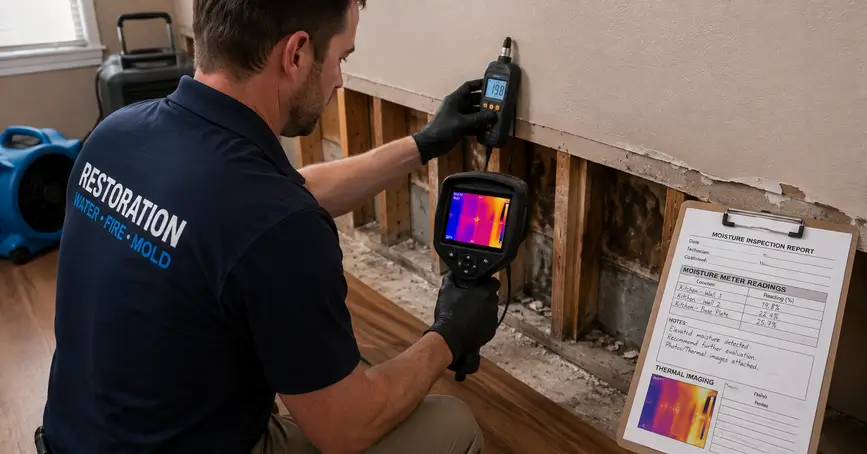
- Moisture mapping: Moisture meters and thermal imaging trace how far water spread inside walls, ceilings and subfloors.
- Removal: Saturated insulation, soaked pad and swollen cabinet bases usually come out.
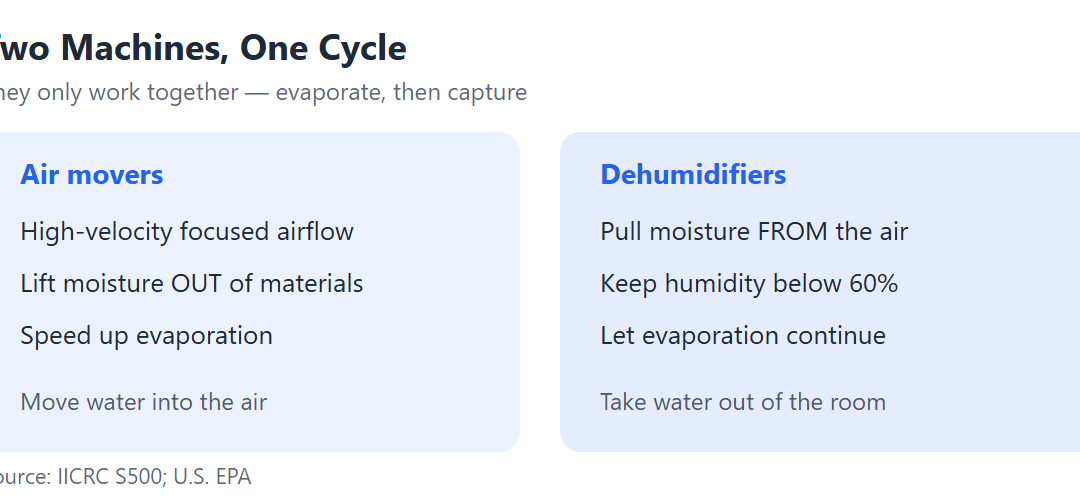
- Structural drying: Air movers and dehumidifiers run, with readings taken until materials test dry.
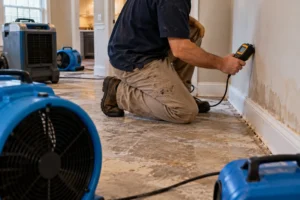
Before I founded SS Water Restoration, I worked in construction and remodeling through SS Construction & Remodeling. That work shapes how I decide what can be dried in place and what has to go. Our water damage restoration service covers emergency extraction and structural drying. Our DFW water damage restoration timeline explains how long each stage takes.
Why does hidden moisture turn into mold if drying is rushed?
Mold needs moisture and time, and rushed drying gives it both. The EPA’s mold cleanup guidance says mold can begin growing on wet materials within 24 to 48 hours if they are not dried quickly. A wall can feel dry to the touch and still hold water in the framing behind it. The EPA water damage table adds that materials wet for more than 48 hours generally need remediation, not just drying.
| Rushed drying | Measured structural drying | |
|---|---|---|
| How dryness is judged | Touch and appearance | Moisture meter readings |
| What it reaches | Room air and surfaces | Wall cavities, subfloor, cabinet bases |
| When equipment leaves | When the room looks dry | When readings confirm dry materials |
| Result | Moisture trapped behind finishes | Hidden moisture found and removed |
If growth has started, our mold remediation services take over. OSHA’s mold remediation guidance lists the protective equipment and safe work practices that job requires.
What drives the cost of burst pipe cleanup?
The cost of burst pipe cleanup depends on how far the water spread and how long it sat, so the most reliable number comes from an on-site estimate. The price depends on how far the water spread and how long it sat. These factors move it most:
- How long water ran before the shutoff was closed
- How many rooms and floors got wet, including water falling from an attic line
- Which materials soaked through, such as carpet and pad, hardwood, drywall, insulation or cabinets
- How long materials stayed wet before drying began, since a delay means more removal
- Whether mold has started, which adds remediation
- How hard the wet areas are to reach, such as inside ceilings or behind built-ins
To apply these factors to your own home, try our water damage cost estimator.
How do you choose a restoration company, and what happens after the call?
Look for a company that does four things:
- Answers around the clock
- Measures moisture instead of guessing
- Explains what it removes and why
- Documents the job for your insurer
After the call, expect an inspection and a moisture map, followed by extraction and drying. Our guide to choosing a restoration company in DFW lists the questions worth asking. SS Water Restoration is a licensed company, license #RCO1659.
We provide 24/7 emergency water damage service across Collin and Denton County, including Plano, Frisco, McKinney, Allen and Richardson. On each job we inspect the damage, map moisture, extract water, set up drying equipment and check readings until the structure is dry. We handle the water damage, and your plumber handles the pipe repair. Call 469-737-0296, or start with our Plano water damage restoration page.
Get in touch to plan your project.
Frequently Asked Questions
Does homeowners insurance cover frozen pipes?
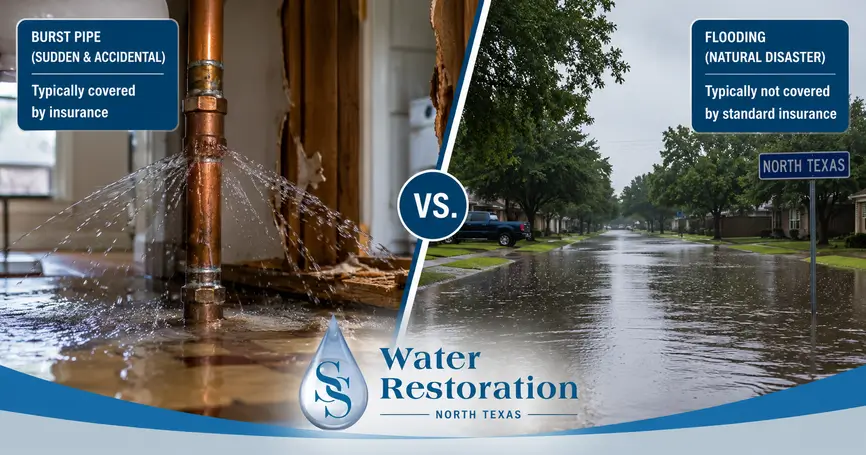
Many homeowners policies cover sudden water damage from a burst pipe, but terms vary. Damage tied to neglect, such as leaving a vacant house unheated, may be excluded. Call your insurer promptly, share your photos and moisture readings, and ask your adjuster what your policy includes.
Will frozen pipes unfreeze on their own?
Yes, frozen pipes usually thaw as temperatures rise, but that is often when a hidden crack starts leaking at full pressure. Do not wait it out. Keep faucets open, know where your main shutoff is, and have a plumber check pipes that froze before you assume they held.
What can I cover my water pipes with if freezing?
Foam pipe sleeves and wrap-on pipe insulation from a hardware store protect exposed lines in attics, garages and crawl spaces. For pipes that freeze repeatedly, a plumber can install heat cable rated for pipes. Cover outdoor hose bibs with insulated faucet covers and disconnect hoses before a freeze.
Sources
- The Basics of Water Remediation – U.S. Environmental Protection Agency, retrieved 2026-09-26
- Mold Cleanup in Your Home – U.S. Environmental Protection Agency, retrieved 2026-09-26
- Water Damage Table from “Mold Prevention in Mold Remediation in Schools and Commercial Buildings” – U.S. Environmental Protection Agency, retrieved 2026-09-26
- Hurricane eMatrix: Mold Remediation – Occupational Safety and Health Administration, retrieved 2026-09-26