

One in 67 insured homes in the US files a water damage claim each year, according to the Insurance Information Institute (2024). When it happens to yours, the first question is always the same: how long is this going to take?
Most guides will say three to seven days. That’s not wrong — but it’s not the full picture for North Texas homeowners. DFW summer humidity averages 67% in June, per NOAA’s NWS Fort Worth climate normals. The IICRC standard for structural drying targets indoor humidity at 40–50%. That 17-point gap is exactly why restoration jobs here take longer than the national estimates you’ll read elsewhere.
This guide covers every phase — extraction, drying, cleanup, and reconstruction — with DFW-specific timelines, the IICRC science behind them, and what your Texas insurance clock looks like once you file.
Key Takeaways
- Structural drying takes 3–7 days for most DFW homes — longer June through September
- The EPA and FEMA identify 48 hours as the critical mold window; every hour past that increases scope and cost
- North Texas summer humidity (59–67%) extends drying beyond national averages by 1–2 days
- Texas insurers must acknowledge your claim within 15 business days under Insurance Code §542.056
- Reconstruction is a separate phase that can’t start until your adjuster approves — add 3–8 weeks
What’s the Short Answer? Your DFW Water Damage Timeline
Most water damage restoration in DFW takes 5–10 days from first call to the end of drying and cleanup. According to the IICRC S500 5th Edition standard (2021), drying duration depends on the class of the loss — how deep the water has saturated your building materials. Reconstruction, if your home needs it, is a separate phase that adds one to eight weeks.
Here’s how it breaks down:
| Phase | What Happens | Typical Duration (DFW) |
| Emergency response + extraction | Assessment, moisture mapping, standing water removal | Hours 0–8 |
| Structural drying | Air movers and dehumidifiers run continuously | 3–7 days (Class 1–2); 7–14 days (Class 3–4) |
| Cleanup and sanitization | Antimicrobial treatment, debris removal | 1–2 days |
| Reconstruction | Drywall, flooring, paint, framing (if needed) | 1–8 weeks |
The IICRC S500 classifies losses into four classes based on saturation depth and material porosity. Per the standard, Class 1 losses — minimal water absorption into materials — dry in one to three days. Class 2 losses affecting a full room take three to seven days. Class 3 losses, where water has saturated walls, ceilings, and insulation, require seven to fourteen days. Class 4 losses involving dense or deeply saturated materials like concrete slabs can take fourteen days or longer.
The IICRC S500 5th Edition standard (2021) defines four water damage classes by drying difficulty. Class 1 involves minimal material absorption and typically resolves in 1–3 days. Class 2, affecting an entire room, takes 3–7 days. Class 3 involves saturated structural materials and requires 7–14 days. Class 4 losses — dense materials, slab concrete, or deeply embedded moisture — need 14 or more days to reach dry standard.
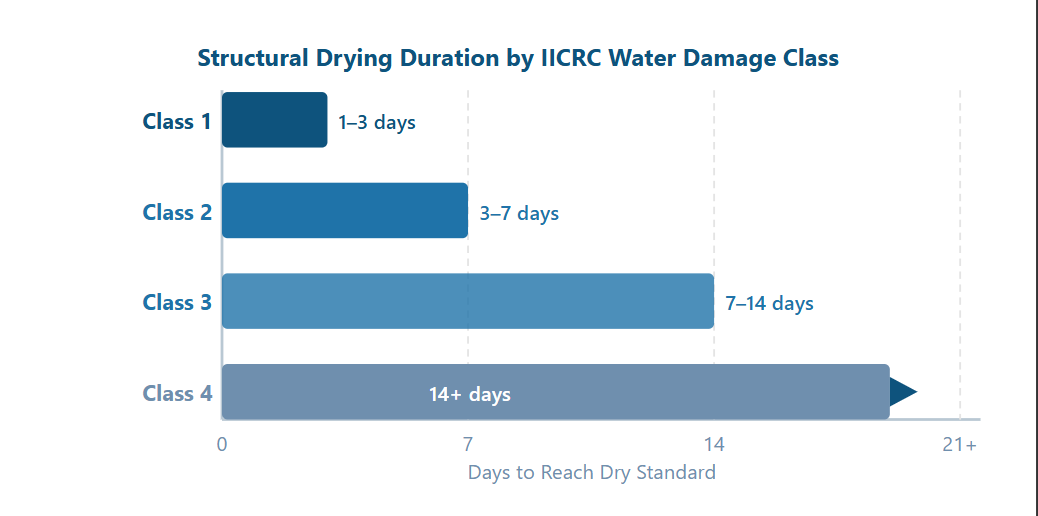
Structural drying times depend on the severity of the water damage and the materials affected. SS Water Restoration provides professional drying, moisture monitoring, and water damage restoration services across Dallas and Fort Worth.
Why Does DFW Summer Humidity Make Water Damage Take Longer?
The IICRC S500 sets the drying target at 40–50% indoor relative humidity. In North Texas, outdoor relative humidity averages 67% in June and 64% in September, according to NOAA NWS Fort Worth’s 1991–2020 climate normals. That means restoration equipment is fighting against ambient moisture the entire time it runs.
The physics are simple: evaporation from wet building materials slows substantially when indoor RH climbs above 60%. Wet drywall can’t release moisture into air that’s already close to saturation. LGR dehumidifiers and axial air movers have to work harder, run longer, and sometimes be redeployed in greater density to compensate.
Here’s the DFW summer humidity picture against the IICRC drying target:
| Month | Average RH | 6 AM Peak RH | IICRC Target | Gap |
| June | 67% | 87% | 40–50% | +17–27% |
| July | 61% | 84% | 40–50% | +11–21% |
| August | 59% | 80% | 40–50% | +9–19% |
| September | 64% | 83% | 40–50% | +14–24% |
Source: NOAA NWS Fort Worth, 1991–2020 30-year climate normals
According to NOAA’s NWS Fort Worth 30-year climate normals, DFW outdoor relative humidity averages 67% in June — 17 percentage points above the IICRC S500 drying target of 50% maximum. During summer mornings, RH routinely peaks at 80–87%. At humidity levels above 60%, evaporation from wet building materials slows substantially, requiring restoration equipment to work harder and run longer to reach dry standard (IICRC S500, 2021).
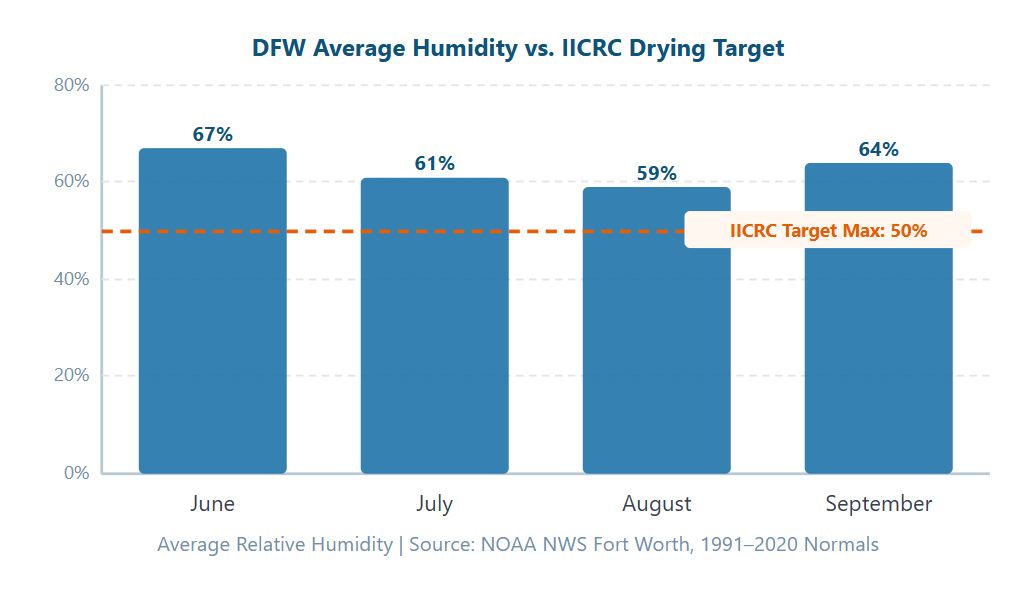
High humidity in the Dallas-Fort Worth area can make structural drying more challenging after water damage. SS Water Restoration uses professional drying equipment and moisture monitoring to help properties reach proper dry standards.
From the field: In our DFW restoration jobs during July and August, Class 2 losses in slab homes consistently run one to two days longer than the three-to-five day estimates you’ll find in national guides. We had a Category 2 loss last summer in Frisco — 900 square feet of saturated engineered hardwood from an attic HVAC overflow. At Day 3, moisture readings in the subfloor were still at 18% (dry standard target: below 12%). Morning humidity was keeping the materials from releasing moisture overnight. It took six full days to reach dry standard. That’s not unusual here in summer. We account for it by increasing equipment density, sealing containment zones, and monitoring readings overnight rather than just at each daily check.
— Stephan Sannikov, CEO & Founder, IICRC Certified, License #RCO1659
The 48-Hour Rule — Why Waiting Costs More Than Time
The U.S. EPA and FEMA both identify 48 hours as the critical threshold: building materials that are professionally dried within 48 hours of water exposure rarely develop mold. Beyond that window, mold colonization becomes probable regardless of how thorough the cleanup.
But mold isn’t the only cost of waiting. Here’s what most restoration guides don’t tell you: clean water doesn’t stay clean.
Category 1 water — the kind that comes from a burst supply line or clean appliance hose — begins degrading into Category 2 or Category 3 contamination within 48 hours, as it absorbs bacteria and contaminants from building surfaces, insulation, and subfloor materials (IICRC S500; C&R Magazine, 2023). That matters for your wallet: restoration cost runs roughly $3.50 per square foot for Category 1 and up to $7.50 per square foot for Category 3, according to Angi’s 2026 pricing data. A 1,000 sq ft loss can shift from $3,500 to $7,500 in scope — just from a two-day delay.
Category 1 clean water from a burst pipe degrades into Category 2 or Category 3 contamination within 48 hours as it absorbs bacteria and building contaminants (IICRC S500, 2021; C&R Magazine, 2023). Restoration costs follow the category: approximately $3.50 per square foot for Category 1 versus $7.50 per square foot for Category 3 (Angi, 2026). A delay of 48 hours doesn’t just risk mold — it can more than double the restoration bill.
Here’s how damage compounds by the hour once water enters your home, per SERVPRO’s published IICRC-referenced timeline (servpro.com, 2024):
- Within minutes: Water spreads; carpet, subfloor, and drywall begin absorbing
- 0–24 hours: Structural integrity of floors, walls, and ceilings starts to weaken
- 24–48 hours: Wood warps, metal surfaces begin to corrode; Category 1 water may have degraded to Category 2
- 48–72 hours: Mold colonization becomes probable, per EPA guidance
- 7 days without treatment: Potential foundation infiltration in DFW slab-on-grade homes
SS Water Restoration’s 60-minute response time exists specifically to reach your home before this escalation curve takes hold. Our 24/7 emergency water damage restoration means the clock doesn’t run against you while you wait for a callback.
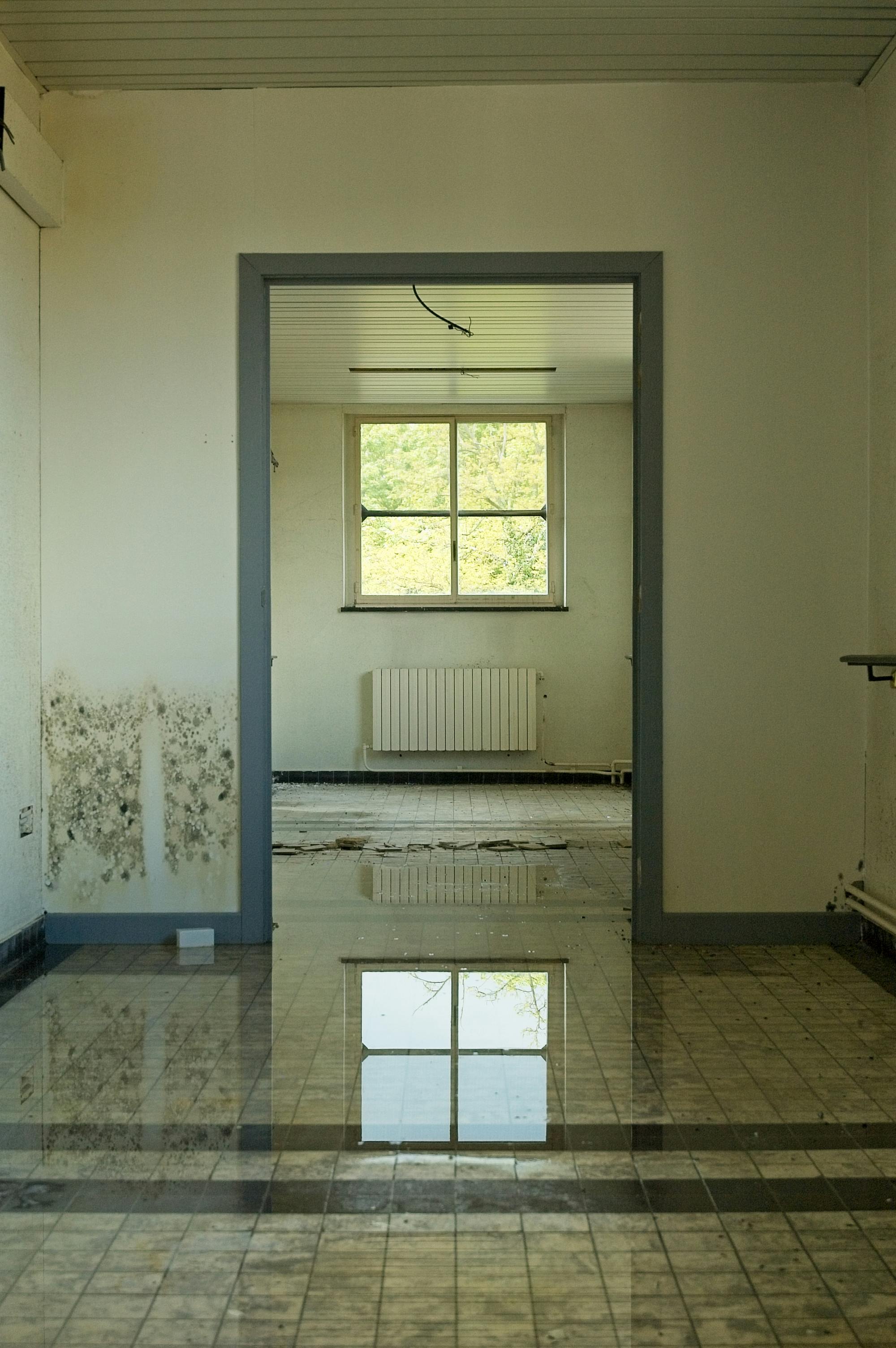
Photo: Emmanuel Codden / Pexels
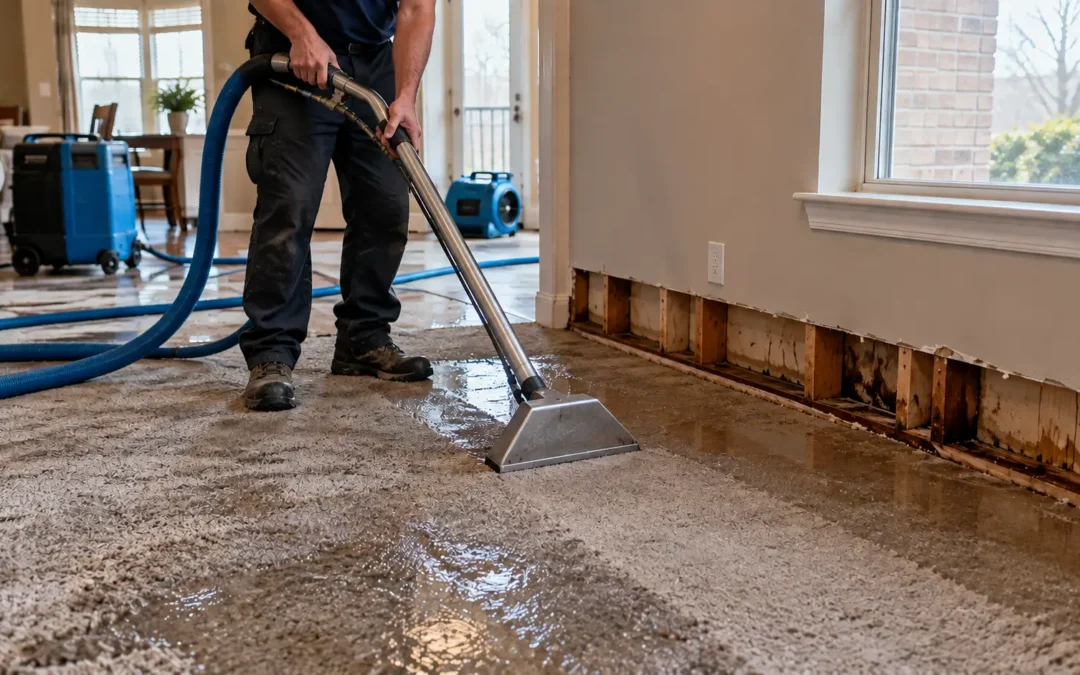
Standing water and moisture can lead to mold growth, damaged flooring, and unsafe indoor conditions. SS Water Restoration provides emergency water extraction, drying, mold cleanup, and water damage restoration across Dallas and Fort Worth.
Water Damage Restoration Phase by Phase — What Happens and When
Per the IICRC S500 5th Edition (2021), water damage restoration follows a mandatory six-phase sequence — each phase must be documented and verified before the next begins, which is why no legitimate company can give you a firm completion date before assessing your specific damage class and category.
IICRC-certified restoration follows a defined sequence. Each phase must be completed and verified before the next begins. Skipping or rushing any step is the most common reason homeowners end up with secondary damage — and delayed insurance approvals.
Here’s what happens during our water damage restoration services in DFW and how long each phase takes in a typical North Texas home:
| Phase | What Happens | Duration (DFW) |
| Emergency response | Arrival, moisture mapping with thermal imaging, damage category assessment | Hours 0–4 |
| Water extraction | Industrial extractors remove all standing water | Hours 2–8 |
| Structural drying | LGR dehumidifiers and axial air movers run continuously; penetrating moisture meter readings taken daily | 3–7 days (Class 1–2); 7–14 days (Class 3–4) |
| Cleanup and sanitization | Antimicrobial treatment, debris removal, content inventory | 1–2 days |
| Demolition (if needed) | Wet drywall, flooring, insulation, and framing removed to reach dry standard | 1–3 days |
| Reconstruction | Drywall, flooring, paint, framing replacement — coordinated with insurance adjuster | 1–8 weeks |
A few things worth understanding here.
Equipment matters. We use LGR (low-grain refrigerant) dehumidifiers for their efficiency at low humidity ranges, axial air movers angled at baseboards and wall cavities, and thermal imaging cameras to find moisture behind surfaces that looks dry to the eye. This isn’t just jargon — each piece addresses a specific part of the drying science.
“Dry standard” is a number, not a look. Restoration is complete when building materials reach their target moisture content (MC) — a documented reading taken with a penetrating moisture meter, not a visual check. The IICRC S500 targets include:
- Wood framing and studs: 12–15% MC
- Drywall: 0.4–1.0% WME (wood moisture equivalent)
- Concrete slab: 3–4% MC (can take 30+ days without specialized equipment)
Visible dryness can be eight or more percentage points above dry standard in a DFW slab home, especially in summer. Don’t accept “it looks dry” as a completion sign.
What to expect day by day during the drying phase. Day 1: equipment is placed — typically 2–4 dehumidifiers and 4–8 air movers for a Class 2 loss. The technician takes baseline moisture readings across all affected surfaces and photographs the setup for your insurance documentation. Days 2–3: readings should show measurable moisture reduction at each check-in. If they don’t, equipment positioning is adjusted and we investigate for hidden moisture pathways behind walls or under flooring. Days 4–5: most Category 1, Class 2 jobs reach dry standard in this window during fall or winter months. In summer, expect one to two additional days. Day 6–7 (summer jobs): final moisture readings confirm dry standard. Equipment is pulled, antimicrobial treatment is applied, and we issue the drying certificate your insurance adjuster needs before reconstruction can begin.
Ask any restoration company for the daily moisture log. If they can’t produce one, the job wasn’t monitored to IICRC standards.
Per the IICRC S500 5th Edition (2021), water damage restoration is complete when affected materials reach documented moisture content targets: wood framing at 12–15% MC, drywall at 0.4–1.0% WME, and concrete slab at 3–4% MC. These readings are taken with penetrating moisture meters, not assessed visually. Visible dryness routinely exceeds dry standard by 8 or more percentage points in humid climates like DFW. Moisture meters help detect hidden water damage inside wood, walls, trim, and structural materials. SS Water Restoration uses professional moisture inspection and drying equipment to restore properties across Dallas and Fort Worth.
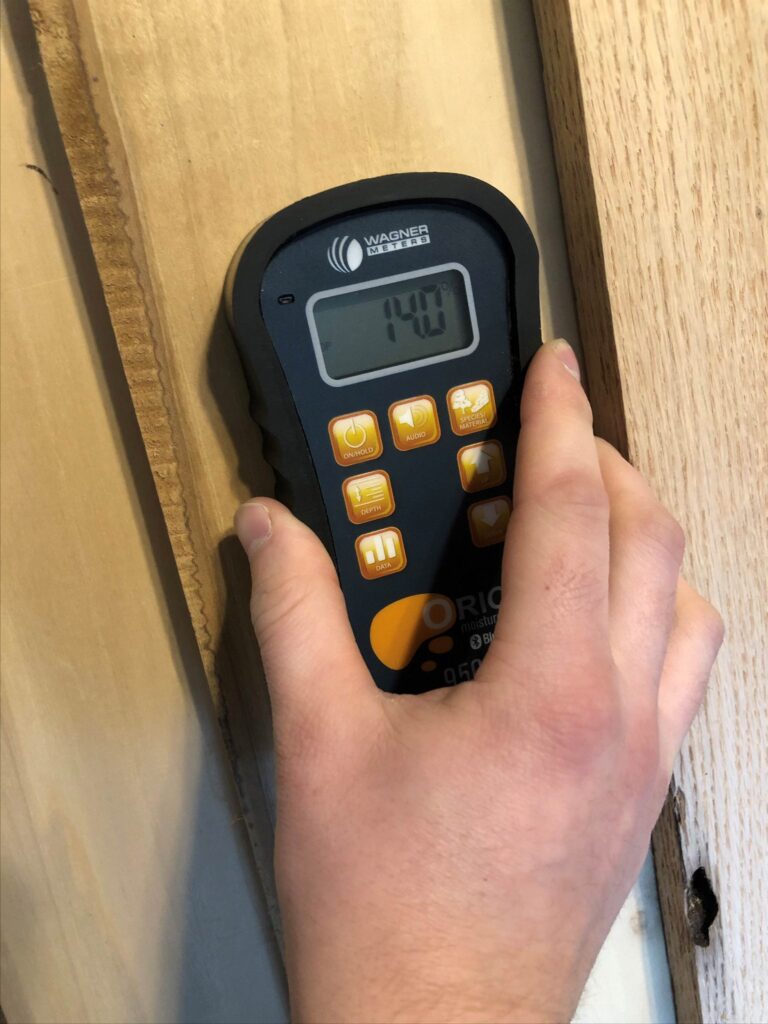
Photo: Hrco, CC BY-SA 4.0, via Wikimedia Commons. A penetrating moisture meter reading determines when restoration is truly complete — not a visual inspection.
Need answers now? If water damage just happened in your home, don’t wait. SS Water Restoration responds in 60 minutes across Plano, Frisco, McKinney, Allen, Dallas, and 32+ DFW communities — 24 hours a day, 7 days a week. Call (469) 737-0296.
What Makes Water Damage Restoration Take Longer in DFW?
DFW averages 67% relative humidity in June — 17–27 percentage points above the IICRC’s 40–50% target drying environment (NOAA NWS Fort Worth, 2026) — making North Texas one of the most challenging markets in the country for hitting standard drying timelines. That’s before factoring in slab foundations, water category, and adjuster scheduling.
Five factors consistently extend timelines beyond standard estimates in North Texas: summer humidity, slab foundations, delayed emergency response, water category, and insurance adjuster scheduling. Here’s how each one works.
- Summer humidity (June–September) Already covered in depth above. The short version: every DFW summer month pushes outdoor humidity above the IICRC drying target. Expect Class 2 losses to take five to seven days during peak summer, versus three to five days in fall or winter.
- Slab-on-grade foundations Nearly all DFW homes are built on slab foundations rather than crawl spaces or basements. When water penetrates under a slab, concrete absorbs moisture and dries at 3–4% MC — significantly slower than wood framing. Slab drying often requires desiccant dehumidifiers rather than standard LGR units, and moisture trapped below the slab can take 30 or more days to reach dry standard without specialized equipment. Detecting a slab leak early is one of the most important things a DFW homeowner can do to limit this scope.
- Response delay Every hour the water sits increases saturation depth in the surrounding materials. A six-hour delay on a Class 2 loss can add one to two full drying days. That’s not a scare tactic — it’s physics. Wet materials continue absorbing until extraction begins.
- Water category Category 3 losses — sewage backup, storm flooding, toilet overflow — require complete removal of all porous materials (carpet, drywall, insulation) before any drying begins. This demolition phase adds two to four days to the front end of the timeline and significantly increases total project cost. Per IICRC S500 classification standards, Category 3 water is grossly contaminated and cannot be treated with drying equipment alone.
- Insurance adjuster scheduling This is the factor that surprises homeowners most. Reconstruction can’t begin until an insurance adjuster has inspected your property and approved the scope of repairs. That approval process adds its own timeline — separate from and after the drying phase. Under Texas law, you have specific rights here. We’ll cover those in the next section.
How Long Does Water Damage Restoration Take with Insurance in Texas?
Under Texas Insurance Code §542.056, your insurer must acknowledge receipt of your claim within 15 business days and then approve or deny it within 15 business days of receiving all required documentation, according to the Texas Department of Insurance. Insurers can extend the second deadline by up to 45 days with written notice.
In practice, the full insurance cycle from filing to reconstruction approval takes three to eight weeks — as a separate phase after your drying is complete.
| Step | Texas Legal Deadline | Typical Real-World Timeline |
| File your claim | Day 0 | Day 0 |
| Insurer acknowledges receipt | 15 business days | 3–10 days typically |
| Adjuster inspection | No statutory deadline | 5–15 days after filing |
| Claim approval or denial | 15 business days after all docs received | 2–4 weeks after adjuster |
| Extension (written notice required) | Up to +45 days | Rare; must be in writing |
Source: Texas Department of Insurance; Insurance Code §542.056
Texas Insurance Code §542.056 requires insurers to acknowledge a water damage claim within 15 business days of receipt and approve or deny it within 15 business days of receiving all required documentation, per the Texas Department of Insurance. Insurers may extend the approval deadline by up to 45 days with written notice. In practice, the full cycle from filing to reconstruction approval takes 3–8 weeks — separate from the drying timeline.
Two things are critical to understand here.
First: drying does not wait for insurance approval. Extraction and structural drying begin the moment our team arrives, and we document everything as we go. That documentation goes to your insurer concurrently — we don’t hold your property hostage to the claims timeline.
Second: SS Water Restoration bills directly with the carriers most DFW homeowners have — Travelers, USAA, State Farm, Safeco, Nationwide, Allstate, and American Family. We know their documentation requirements, their preferred formats, and the adjusters covering the North Texas market. That relationship speeds the approval cycle. For a closer look at how the claim process works, our insurance claim tips guide walks through documentation, adjuster communication, and what to do if a claim is disputed.
How Do You Know When Water Damage Restoration Is Complete?
Water damage restoration is complete when all affected materials reach their documented moisture content targets — verified with a penetrating moisture meter, not a visual inspection. According to the IICRC S500 (2021), the target moisture content values for common building materials are:
- Wood framing and studs: 12–15% MC
- Drywall: 0.4–1.0% WME (wood moisture equivalent)
- Concrete slab: 3–4% MC (may require 30+ days without specialized equipment)
- Hardwood flooring: Return to within 2–4% of the equilibrium MC for your region
IICRC-certified companies document these readings daily throughout the drying phase. You should be able to ask for the moisture log — a written record of meter readings taken at each monitored location for each day of the drying process.
Don’t accept a completion sign-off based on appearance alone. In DFW slab homes, especially after summer losses, materials can look and feel dry while still measuring 8–10 percentage points above dry standard. Secondary damage — warped hardwood, delaminated subfloor, mold behind freshly replaced drywall — is almost always the result of a job that was called “done” too early.
SS Water Restoration provides written moisture reading documentation with every job. It’s an IICRC requirement, and it’s what your insurance adjuster will ask for when reviewing the completed scope.
Frequently Asked Questions
How long does water damage take to dry completely?
According to the IICRC S500 5th Edition standard (2021), drying duration depends on the class of loss — meaning how deeply water has saturated the building materials. Class 1 losses, involving minimal absorption, typically dry in one to three days. Class 2 losses affecting a whole room take three to seven days. Class 3 losses with structural saturation require seven to fourteen days, and Class 4 losses with deep dense-material absorption can take fourteen days or longer.
In North Texas, add one to two days to any of those ranges during June through September, when outdoor humidity averages 59–67% — well above the IICRC drying target of 40–50% RH (NOAA NWS Fort Worth, 1991–2020 normals). “Completely dry” is defined by moisture meter readings, not appearance. Wood framing must reach 12–15% MC, drywall 0.4–1.0% WME. Ask your restoration company for a written moisture log that documents daily readings at each monitored location.
Can I stay in my home during water damage restoration in DFW?
It depends on the water category. Category 1 losses — clean water from a supply line, appliance hose, or ice maker — typically allow occupancy with precautions. The main discomfort is noise from air movers running continuously, and some air quality considerations from disturbed materials. Reasonable precautions include limiting time in the affected area and keeping pets and children away from the drying zone.
Category 2 losses (gray water from appliances or sink overflow) and Category 3 losses (sewage backup, toilet bowl overflow, or storm flooding) generally require temporary relocation, especially for households with children, elderly residents, or anyone with respiratory conditions. Category 3 water is grossly contaminated under IICRC S500 classification — the affected area is not safe for occupancy during restoration.
Most homeowners insurance policies cover Additional Living Expenses (ALE) for displacement caused by a covered loss. Contact your adjuster early in the process to confirm your ALE coverage and daily limits before making hotel arrangements.
Does North Texas summer humidity really affect how long drying takes?
Yes — and more than most homeowners expect. The IICRC S500 targets indoor relative humidity at 40–50% during the drying phase. DFW outdoor humidity averages 67% in June, 61% in July, 59% in August, and 64% in September, per NOAA NWS Fort Worth’s 30-year climate normals. Morning peak readings hit 80–87% during those same months.
When ambient humidity stays above 60%, evaporation from wet building materials slows substantially. LGR dehumidifiers are working against outdoor air that is already near saturation — they have to pull harder and run longer to move moisture from walls and floors into the air, and then extract it. In our DFW field experience, Class 2 losses during peak summer months consistently run one to two days longer than the same job would take in October or February. We account for this by increasing equipment density, sealing containment around the drying zone, and monitoring moisture readings overnight rather than just during daily check-ins.
How long does the insurance claim process take for water damage in Texas?
The drying and insurance timelines run in parallel — but reconstruction can’t begin until your insurer approves the scope. Under Texas Insurance Code §542.056, your insurer must acknowledge your claim within 15 business days and approve or deny it within 15 business days of receiving all required documentation, according to the Texas Department of Insurance. They may extend that second deadline by up to 45 days with written notice.
In practice, the full cycle from filing your claim to receiving reconstruction approval takes three to eight weeks. The adjuster inspection alone typically takes five to fifteen days after filing. That means even a straightforward job can sit for four to six weeks between the end of drying and the start of reconstruction.
SS Water Restoration bills directly with the major carriers serving North Texas — Travelers, USAA, State Farm, Safeco, Nationwide, Allstate, and American Family. We know their documentation formats and handle the adjuster coordination on your behalf. Drying begins the day we arrive; the paperwork goes to your insurer concurrently.
What happens if water damage is not dried within 48 hours?
The U.S. EPA and FEMA identify 48 hours as the critical threshold: materials dried within 48 hours of water exposure rarely develop mold. Beyond that window, mold colonization becomes probable regardless of how thorough the subsequent cleanup (EPA, Water Damage and Mold Prevention table, current guidance). Mold remediation is a separate, additional process — and a separate cost.
The 48-hour window also affects water category. Category 1 clean water — from a supply line or clean appliance — begins degrading into Category 2 or Category 3 contamination as it sits and absorbs bacteria from building materials, per IICRC S500 classification standards (2021). Restoration costs follow the category: roughly $3.50 per square foot for Category 1 and up to $7.50 per square foot for Category 3, according to Angi’s 2026 pricing data. A 1,000 square foot loss can shift from $3,500 to $7,500 in total cost from a delay of under two days. Speed of response is the single biggest factor in controlling both mold risk and restoration scope.
How long does reconstruction take after water damage restoration?
Reconstruction is a separate phase from drying and cleanup — and it cannot begin until your insurance adjuster has inspected and approved the scope of repairs. That approval process typically adds two to six weeks to the total project timeline, even after drying is complete.
The reconstruction timeline itself depends on the extent of structural damage. Class 1 losses with minimal material saturation may require only paint touch-up and floor cleaning — one to three days of work. Class 2 and 3 losses involving wet drywall, flooring, or insulation typically need two to four weeks of reconstruction once work begins. Class 4 losses with structural framing damage or slab-related repairs can take four to eight weeks or longer.
SS Water Restoration manages the full scope — from extraction through final walkthrough — and coordinates directly with your insurer to move the adjuster approval as quickly as possible. We document dry standard readings and scope of damage in the format your carrier expects, which reduces back-and-forth and speeds the reconstruction start date.
The Bottom Line: What North Texas Homeowners Should Know
For most North Texas homeowners, water damage restoration takes 5–14 business days from first call to final sign-off — not counting the separate 3–8 week insurance approval period that precedes reconstruction (Texas Department of Insurance, §542.056). That range is wider than national guides suggest, and the gap is almost entirely explained by DFW-specific factors.
Water damage restoration in DFW is not a single process with a single timeline. It’s four distinct phases — extraction, drying, cleanup, and reconstruction — each with its own clock.
Here’s what to take away from this guide:
- Drying alone takes 3–7 days for most homes, and 1–2 days longer June through September when DFW humidity fights the process
- The 48-hour window is real. Every hour past it increases mold probability and can push your Category 1 loss into Category 3 territory — more than doubling the cost
- Dry standard is a number. Ask for the moisture log; don’t accept a visual sign-off
- Texas insurance law gives you specific rights — but reconstruction waits for adjuster approval, adding 3–8 weeks after drying is done
- DFW slab foundations and summer humidity make local jobs run longer than national guides suggest
If water damage just happened in your home — or if you’re in the middle of a restoration and something doesn’t seem right — call SS Water Restoration. We respond in 60 minutes across Plano, Frisco, McKinney, Allen, Dallas, and 32+ DFW communities, 24 hours a day. Our team is IICRC certified, licensed (#RCO1659), and has helped more than 50,000 North Texas homeowners restore their homes.
Call now: [(469) 737-0296](tel:4697370296)
Links from this post you may find useful:
- Water Damage Restoration Services in DFW
- Mold Remediation
- Water Damage Insurance Claim Tips
- How to Detect a Slab Leak
- 24/7 Emergency Water Damage Restoration in Texas
Update these existing pages to link back to this post:
- Water Damage Restoration Plano TX — anchor: “how long restoration takes in Plano”
- Understanding Water Damage Restoration Cost — anchor: “water damage restoration timeline”
- What Happens After Water Damage Restoration — anchor: “restoration timeline by damage class”
Sources
- Insurance Information Institute (III). Facts + Statistics: Homeowners and Renters Insurance. Retrieved 2026-05-21. https://www.iii.org/fact-statistic/facts-statistics-homeowners-and-renters-insurance
- IICRC. S500 Standard for Professional Water Damage Restoration, 5th Edition. 2021. https://iicrc.org/s500/
- NOAA National Weather Service Fort Worth. DFW Climate Normals, Means, and Extremes (1991–2020). Retrieved 2026-05-21. https://www.weather.gov/fwd/dfwrecordsnormals
- U.S. Environmental Protection Agency. Water Damage: Mold Prevention in Schools and Commercial Buildings. Retrieved 2026-05-21. https://www.epa.gov/mold/water-damage-table-mold-prevention-mold-remediation-schools-and-commercial-buildings
- IICRC / C&R Magazine. Determining Water Category, Class of Drying, and Environment Condition. 2023. https://www.candrmagazine.com/determining-water-category-class-of-drying-and-environment-condition/
- Angi. How Much Does Water Damage Restoration Cost? 2026 Pricing Guide. 2026. https://www.angi.com/articles/how-much-does-it-cost-repair-water-damage.htm
- SERVPRO. How Fast Can Water Cause Damage to Property. 2024. https://www.servpro.com/resources/how-fast-can-water-cause-damage-property
- Texas Department of Insurance. Insurance Companies Must Meet Deadlines to Respond to Texas Claims. Retrieved 2026-05-21. https://www.tdi.texas.gov/blog/insurance-claim-deadlines.html
- SERVPRO. Know the Four Classes of Water Loss and Water Damage. Retrieved 2026-05-21. https://www.servpro.com/resources/water-damage/know-the-four-classes-water-loss-water-damage