

A North Texas storm can dump several inches of rain in under an hour, and water finds its way in through doors, windows, roofs, and foundations fast. In the first chaotic minutes, what you do, and what you avoid, decides how safe you stay and how much you’ll spend. Just one inch of floodwater can cause around $25,000 in damage, so a calm, ordered response matters. Here’s exactly what to do first.
Key Takeaways
- One inch of floodwater can cause around $25,000 in damage (FEMA via Insurify).
- Treat all floodwater as contaminated “Category 3” black water and avoid contact (IICRC S500).
- Standard homeowners insurance usually excludes rising-water flooding; that needs separate flood coverage.
- Document everything before cleanup, and start drying within 24-48 hours to limit mold.
What should you do in the first hour after storm flooding?
Put safety before salvage: if you can reach your electrical panel without standing in water, shut off power to the affected areas, and avoid walking through standing water until you know it’s safe. Floodwater hides live electrical hazards, sharp debris, and contamination, and no belonging is worth an injury.
Move through these priorities in order:
- Protect people and pets first. Get everyone out of flooded rooms.
- Cut the power to wet areas at the breaker, only if you can do it safely and dry.
- Watch for structural and gas hazards. If you smell gas or see sagging ceilings, leave and call for help.
- Stop the source if you can. Shut off the main water supply if flooding is from a burst line rather than rising water.
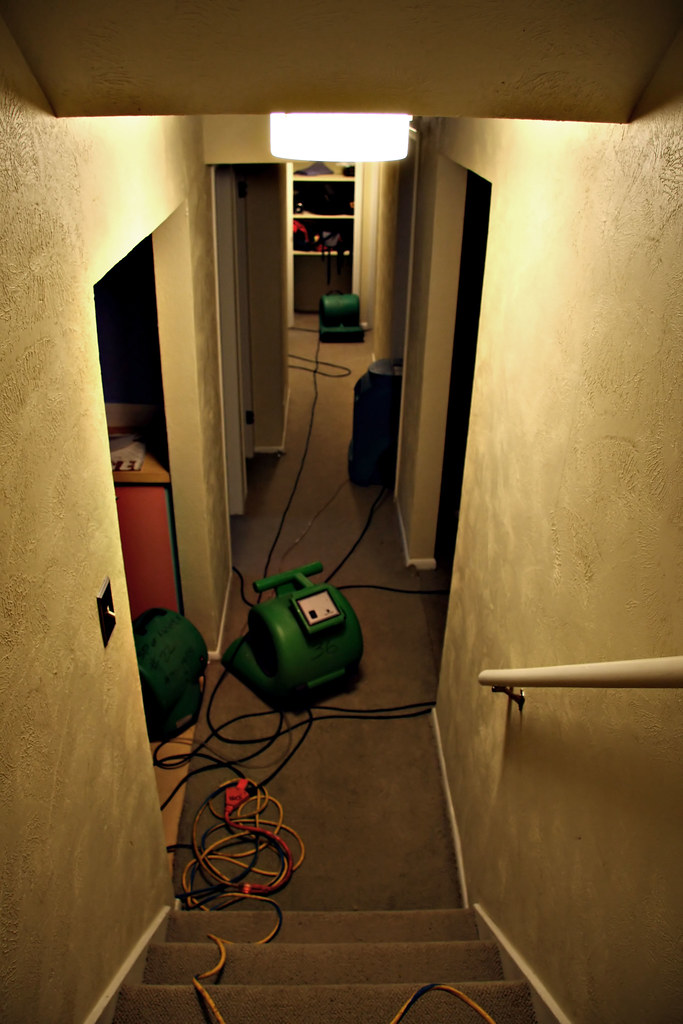
- Don’t use household vacuums or plug in appliances in wet areas.
Once everyone’s safe and the power risk is handled, you can shift to documentation and cleanup. Not before.
Is storm and flood water dangerous to touch?
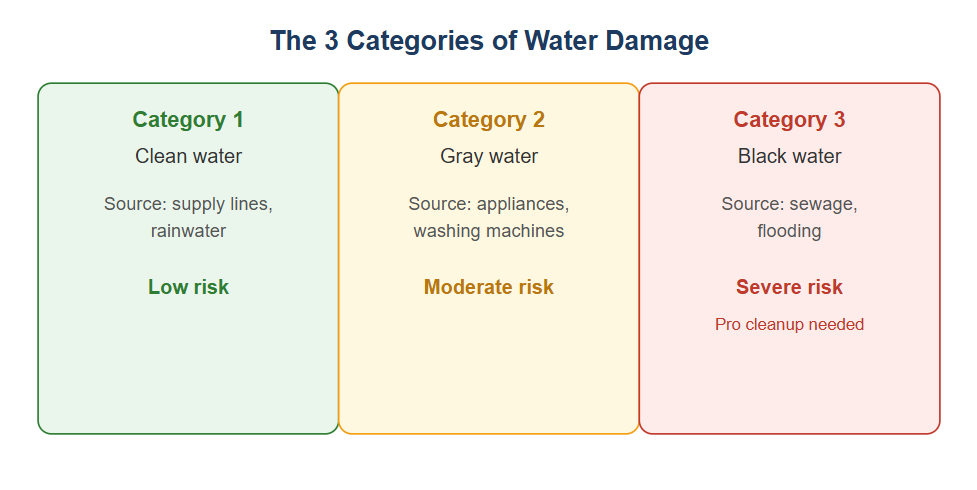
Yes. Under the IICRC S500 standard, floodwater is treated as Category 3 “black water,” the most contaminated class, which is grossly contaminated and can contain pathogenic, toxigenic, or other harmful agents (IICRC S500, 2021). All floodwater is treated this way precisely because there’s no way to know what it picked up on the way in.
That contamination uncertainty is exactly why it’s handled as the most hazardous class. It means keeping children and pets well clear, wearing waterproof boots and gloves if you must enter, and throwing out any food or drink that touched the water. Anything porous that soaked in floodwater, like carpet padding or upholstered furniture, is usually a contamination risk, not just a drying problem.
Why does this matter so much? Because the instinct after a flood is to wade in and start grabbing belongings. With Category 3 water, that exposure is a genuine health hazard, not an inconvenience.
How do you document storm damage for insurance?
Photograph and video everything before you move or throw anything away, and keep damaged items until your adjuster signs off on disposal. Thorough documentation is the difference between a smooth claim and a denied one.
Capture wide shots of each affected room, close-ups of damaged items, and the high-water line on the walls. Save receipts for anything you buy during cleanup, like fans, pumps, or a hotel. Then contact your insurer as soon as possible to open the claim. For the full process, see our guide on filing a water damage insurance claim in Texas.
Does homeowners insurance cover storm flooding in Texas?
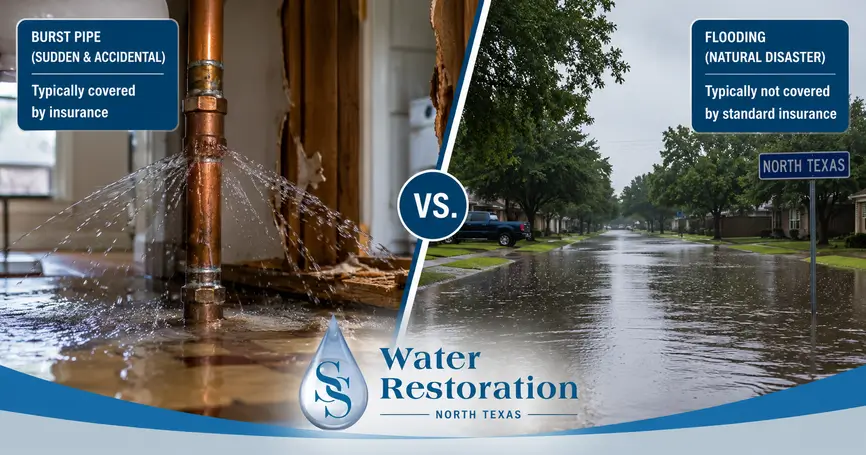
Usually not on its own. Standard homeowners policies typically exclude damage from rising floodwater, which requires a separate flood insurance policy; wind-driven rain or a storm-damaged roof may be covered under your regular policy instead. This distinction catches many Texans off guard.
The gap is real and growing. In Texas, the average annual flood insurance premium is projected to rise from $779 to $1,188, a 53% increase, as rates adjust to actual risk (Captives Insure, 2025). And coverage is rare: only about 7% of Texas homeowners carry federal flood insurance, a figure that drops to roughly 2% in inland areas (KUT, 2025). FEMA assistance can help, up to $87,200 per household, but historical average payouts have been a small fraction of that.
The takeaway: don’t assume you’re covered. Check whether your flooding came from rising water (flood policy) or a wind/roof breach (homeowners policy) before you assume anything about your claim.
How fast must you dry a flooded home?
Begin water extraction and drying within 24-48 hours, because materials left wet beyond that window are at real risk of mold (EPA). In a humid Texas summer, that clock runs even faster.
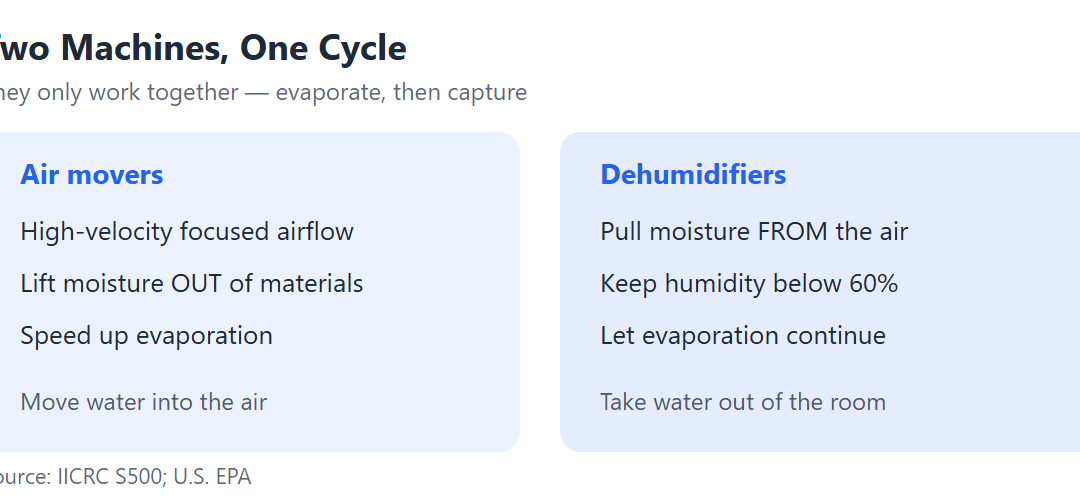
 Standing water should be pumped out, then structural drying with commercial air movers and dehumidifiers brings materials back below the moisture threshold. Household fans alone rarely move enough air to dry walls and subfloor in time.
What does professional storm flood restoration involve?
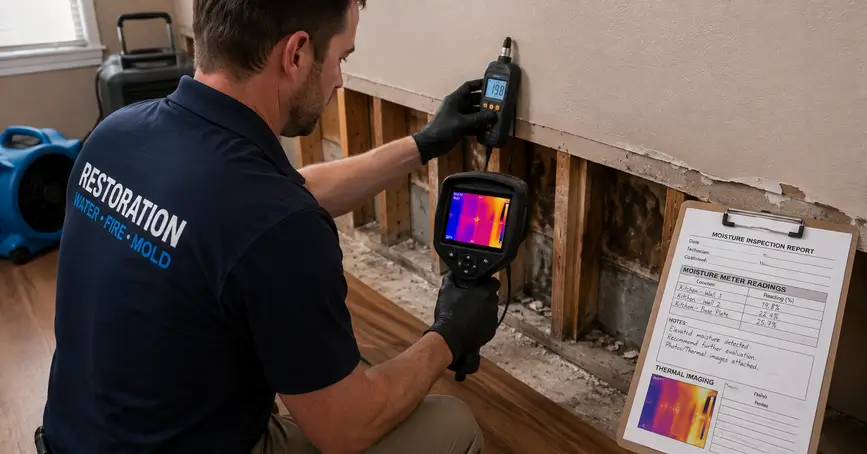
Professional restoration goes well beyond mopping up. A crew extracts standing water, removes unsalvageable contaminated materials, then runs structural drying and dehumidification while monitoring moisture readings until the structure is verifiably dry.
The work typically includes water extraction, removal of soaked carpet pad and damaged drywall, antimicrobial treatment for the Category 3 contamination, and content cleaning. Our water damage restoration team responds across DFW, and you can review what to expect in our DFW restoration timeline.
How can DFW homeowners prepare for the next storm?
The best time to prepare is before the next storm warning. Simple steps cut your flood risk and speed up any future claim.
Keep gutters and downspouts clear so water drains away from the foundation. Make sure the ground slopes away from the house. If you have a sump pump, test it before storm season and consider a battery backup. Install water sensors in low spots, and check whether you’re in a FEMA flood zone so you know if you need a flood policy. Keep an emergency kit and an up-to-date photo inventory of your belongings.
Frequently Asked Questions
What should I do first when my house floods?
Protect people first, then cut power to flooded areas if you can do it safely and dry, and avoid walking through standing water. Floodwater hides electrical and contamination hazards. Only after safety is handled should you document damage and start cleanup.
Is flood water contaminated?
Yes. Floodwater is treated as Category 3 “black water,” potentially carrying sewage, bacteria, and chemicals (IICRC S500). Keep kids and pets away, wear protective gear, and discard porous items and any food that contacted the water.
Will insurance pay for storm flooding in Texas?
Often not under a standard homeowners policy, which usually excludes rising-water flooding; that needs separate flood insurance. Wind-driven rain or roof breaches may be covered. Texas flood premiums are rising from $779 to $1,188 on average (Captives Insure, 2025).
How long do I have before mold grows?
The EPA advises that drying wet materials within 24-48 hours usually prevents mold; past that window, mold is likely to grow (EPA). In a humid Texas summer that window is tight, so professional water extraction and structural drying should start as soon as it’s safe.
Conclusion
When a summer storm floods your DFW home, the order of operations is everything: safety first, then documentation, then fast drying. Rushing into contaminated water or assuming you’re insured for flooding are the two most common, and costly, mistakes.
- One inch of water can cause around $25,000 in damage.
- Treat floodwater as contaminated and keep people clear.
- Check flood vs. homeowners coverage before you assume anything.
- Start professional drying within 24-48 hours to beat mold.
If storm water is in your home right now, our 24/7 emergency water damage team serves homes across Dallas-Fort Worth. Call for an immediate response.
Sources
- Insurify (citing FEMA), “Water Damage Statistics,” retrieved 2026-06-18, https://insurify.com/homeowners-insurance/insights/water-damage-statistics/
- IICRC, “S500 Standard for Professional Water Damage Restoration,” retrieved 2026-06-18, https://iicrc.org/s500/
- Captives Insure, “Texas Floods of July 2025,” retrieved 2026-06-18, https://captives.insure/insights/texas-floods-of-july-2025
- KUT Radio, “Texas floods damaged homes. Many don’t have flood insurance,” retrieved 2026-06-18, https://www.kut.org/housing/2025-07-18/austin-texas-flood-home-insurance-fema-financial-assistance
- U.S. EPA, “A Brief Guide to Mold, Moisture and Your Home,” retrieved 2026-06-18, https://www.epa.gov/mold/brief-guide-mold-moisture-and-your-home