

Whether you’re listing a home that flooded two years ago or considering an offer on a house with a suspicious ceiling stain, water damage history raises the same anxious question on both sides: what has to be disclosed, and what does it do to the value? In Texas, the rules are stricter than many people expect, and getting them wrong can mean a lawsuit. Here’s what sellers and buyers in Dallas-Fort Worth need to know.
Key Takeaways
- Texas sellers must disclose known water damage, even after repairs, under Property Code § 5.008 (Houzeo).
- Selling “as is” does not remove the duty to disclose known defects.
- Non-disclosure can trigger DTPA claims, including repair costs, diminished value, and treble (3x) damages (GetHomeCash).
- Professionally repairing and documenting damage before listing protects both value and the sale.
Note: This article is general information, not legal advice. Consult a licensed Texas real estate agent or attorney about your specific situation.
Do you have to disclose water damage when selling in Texas?
Yes. Texas sellers are legally required to disclose known material facts, including past and present water damage, under the Seller’s Disclosure Notice mandated by Texas Property Code § 5.008 (Houzeo, 2026). This is a fundamental requirement for most residential sales in the state.

The disclosure obligation is broad. Sellers must reveal any history of flooding, drainage problems, or water intrusion, and the previous water damage and details of repairs must be disclosed even after the repairs are complete (GetHomeCash, 2026). In other words, fixing the problem doesn’t erase your duty to mention it.
That surprises a lot of sellers. They assume a professional repair wipes the slate clean. Legally, it doesn’t, though as we’ll see, a documented repair can actually work in your favor.
Can you sell “as is” to avoid disclosure?
No. Selling a house “as is” does not shield Texas sellers from liability for non-disclosure of known defects (GetHomeCash, 2026). The “as is” label limits your obligation to make repairs; it does not eliminate your obligation to tell the truth about what you know.
This is one of the most common and costly misunderstandings in real estate. An “as is” sale means the buyer accepts the property’s condition without expecting you to fix things, but you still have to disclose the known water damage history so the buyer can make an informed decision. Hiding a known defect behind an “as is” listing is exactly the scenario that lands sellers in court.
What happens if you don’t disclose water damage?
The penalties are serious. Buyers who discover undisclosed water damage after purchase can pursue legal action under the Texas Deceptive Trade Practices Act (DTPA), with successful claims covering repair costs, diminished property value, and attorney fees (GetHomeCash, 2026). It’s a real financial exposure, not a theoretical one.

It can get worse. In cases where a court determines the non-disclosure was intentional, it may award treble damages, three times the actual damages (GetHomeCash, 2026). Weighed against that risk, disclosing a repaired leak is clearly the safer path.
How much does water damage affect home value?
It depends almost entirely on whether the damage was repaired and documented. Unaddressed or undocumented water damage lowers value and scares off buyers, while professionally repaired and documented damage minimizes the hit and can even reassure a cautious buyer.
 The pattern is consistent: buyers fear the unknown more than the known. A clearly documented repair turns “this house had water damage” into “this house had water damage, and here’s the proof it was professionally fixed.”
Should you repair water damage before listing?
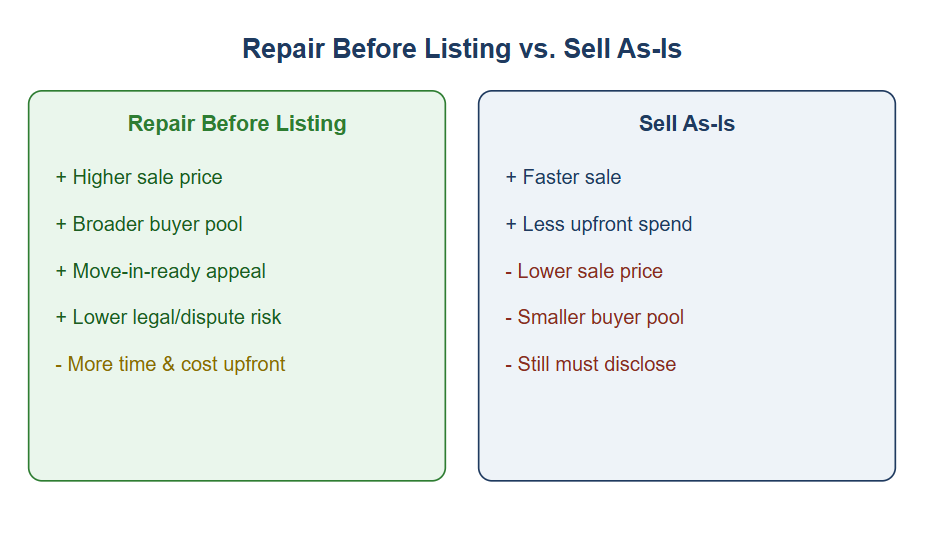
For most sellers, yes. Making repairs before listing can yield a higher sale price and attract more buyers who want a move-in-ready home (GetHomeCash, 2026). Whether to repair or sell as-is depends on your finances, timeline, and risk tolerance.
Selling as-is can make sense if you’re under time pressure or selling to an investor who expects to renovate. But for a traditional sale on the open market, a documented professional repair usually pays for itself in a stronger price and a smoother closing. The key word is documented, which brings us to the most underrated selling asset you can have.
What should buyers check for past water damage?
Buyers should look for the telltale signs and demand the paper trail: ceiling and wall stains, fresh patches of paint, musty odors, warped flooring or trim, and the seller’s written disclosure plus any restoration records. Trust documentation over reassurances.
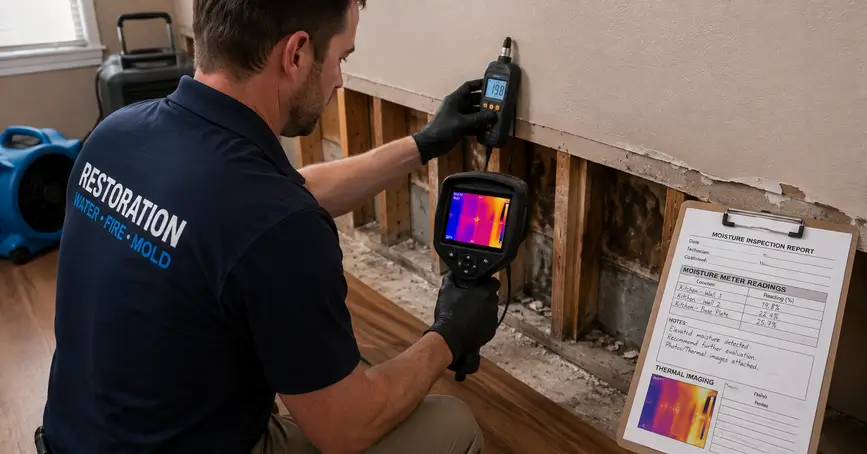
For buyers: A seller who can produce a professional restoration report, with moisture readings and a completion record, is showing you the problem was handled correctly. A seller who only says “oh, that was fixed years ago” with no paperwork is asking you to take on unknown risk. When in doubt, pay for an independent moisture inspection.
A few targeted checks during a showing go a long way. Look up at ceilings under bathrooms and attics, run your nose along closets and baseboards, and press gently on suspicious drywall. Our guide on telling new vs. old water damage helps you read the signs, and a professional water damage inspection settles any doubt.
How professional restoration protects a sale
A documented professional restoration is a selling asset, not just a cost. Moisture logs, before-and-after records, and a completion report give buyers and agents the confidence to move forward at a fair price.
That paper trail does two jobs at once: it satisfies your Texas disclosure obligation honestly, and it reframes the damage as a solved problem rather than a hidden risk. If you’re preparing to list, our water damage restoration services include the documentation that makes disclosure straightforward, and you can compare typical restoration costs in DFW before you decide.
Frequently Asked Questions
Do I have to disclose repaired water damage in Texas?
Yes. Texas Property Code § 5.008 requires disclosing known water damage, and the damage plus repair details must be disclosed even after repairs are complete (Houzeo, 2026). Fixing the issue does not remove your legal duty to disclose its history.
Does water damage always lower home value?
Not necessarily. Undocumented or unrepaired damage lowers value and deters buyers, but repairing before listing can yield a higher sale price and broaden your buyer pool (GetHomeCash, 2026). Buyers fear the unknown most, so proof of a proper repair restores confidence.
Can I sell a house as-is with water damage?
Yes, but “as is” only limits your duty to make repairs, not your duty to disclose. Selling as-is does not shield you from liability for failing to disclose known defects, so you must still report the water damage history on the Seller’s Disclosure Notice.
Should buyers get a separate moisture inspection?
It’s strongly recommended when there’s any history or sign of water damage. An independent moisture inspection uses meters and thermal imaging to find hidden moisture the seller’s disclosure might not capture, giving you objective data before you commit to one of the largest purchases of your life.
Conclusion
Water damage history doesn’t have to sink a DFW home sale, but hiding it can. Texas law requires honest disclosure even after repairs, and the penalties for dodging that duty far outweigh the discomfort of mentioning an old leak.
- Disclose known water damage, even repaired, under § 5.008.
- “As is” does not exempt you from disclosure.
- Non-disclosure risks DTPA claims and treble damages.
- Documented professional repairs protect both value and the sale.
Planning to sell, or evaluating a home with a water-damage past? Schedule a free DFW inspection and get the documentation that turns a red flag into a solved problem.
Sources
- Houzeo, “Seller’s Disclosure in Texas (2026 Update),” retrieved 2026-06-18, https://www.houzeo.com/blog/seller-disclosures-in-texas/
- GetHomeCash, “Disclosing Water Damage When Selling a House in Texas,” retrieved 2026-06-18, https://www.gethomecash.com/blog/disclosing-water-damage-selling-house-texas
- GetHomeCash, “Texas Water Damage Disclosure: Legal Guide to Selling,” retrieved 2026-06-18, https://www.gethomecash.com/blog/texas-water-damage-disclosure-selling
- GetHomeCash, “Selling a House with Water Damage in Texas,” retrieved 2026-06-18, https://www.gethomecash.com/blog/selling-house-water-damage-texas