

Water Extraction Services Explained: Why Fast Water Removal Matters After Damage
Water extraction is the removal of standing and soaked-in water from a building with powered extractors and pumps. It is followed by structural drying until moisture meters show materials are dry. In Plano, many homes sit on concrete slabs with the AC in the attic. Starting fast limits how far water wicks into drywall, flooring and framing.
Key Takeaways
- Mold can start growing indoors quickly on wet materials, so extraction and drying should begin without delay.
- Extraction removes the water. Dehumidifiers and logged moisture readings finish the job and stop hidden damage.
- There is no standard price. Water type, wet area, removed materials and drying days drive the bill.
What is water extraction, and when does a home need it?
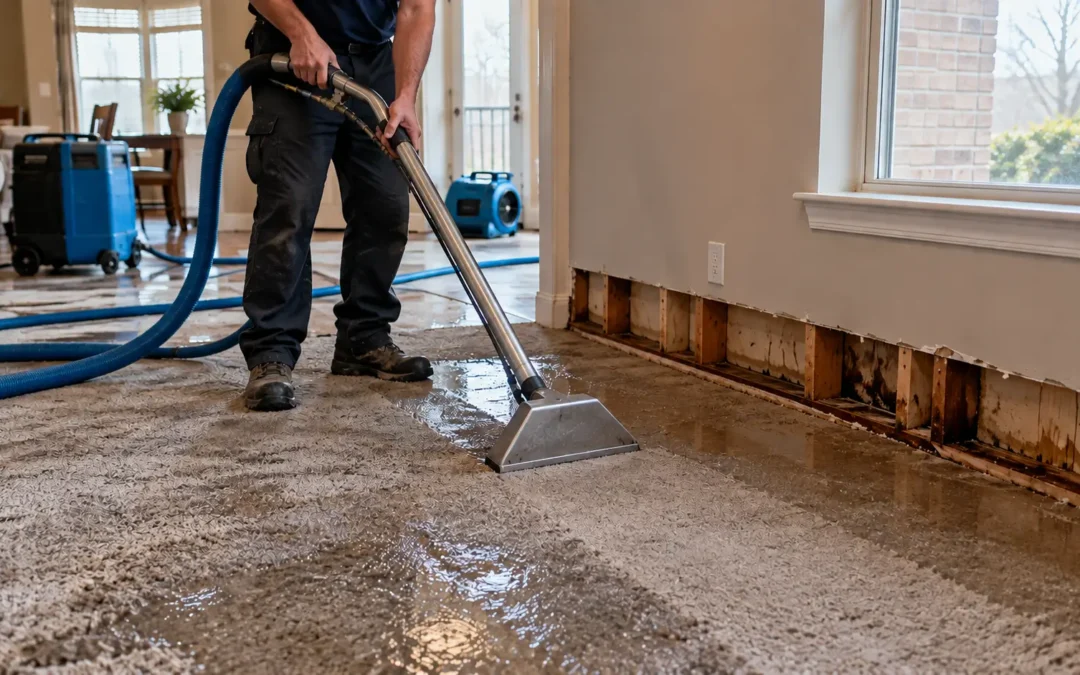
Water extraction means pulling water out of a building with powered extractors and pumps. The crew removes the standing water first, then the water that carpet, pad and drywall have absorbed. A home needs it once water pools, spreads past a small spot or reaches walls and cabinets. Extraction is the first stage of our water damage restoration and structural drying service.
Why do the first hours after a leak matter?
Water keeps wicking into drywall, baseboards and flooring after the leak stops, so every hour widens the area to dry or remove. OSHA’s mold overview states that mold can begin to grow indoors within 24 to 48 hours when moisture is present. A slow start can add mold remediation to a clean-water job.
How does a crew extract the water and dry the structure?
A crew stops the source, maps the moisture and extracts the water. It then removes what cannot dry and dries the rest of the structure:
- Shut off water and power, then judge whether the water is clean, gray or sewage.
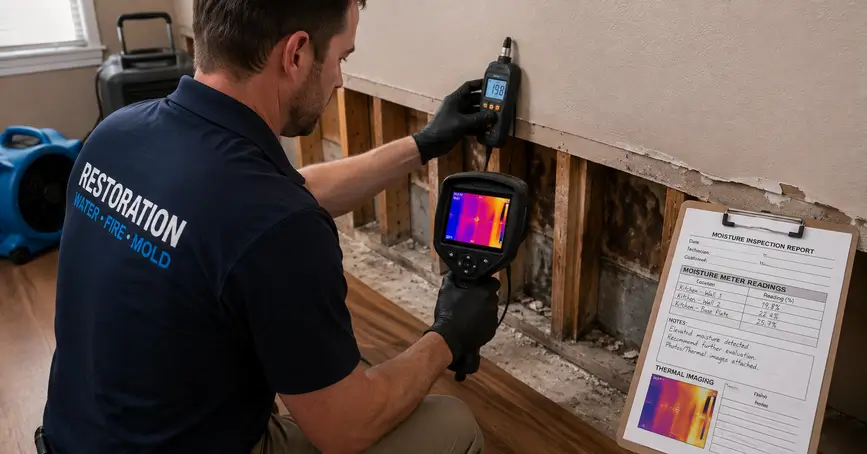
- Map moisture with meters and a thermal camera.
- Extract standing water, then pull water from the carpet and pad.
- Remove soaked pad, insulation and drywall.
- Run dehumidifiers and air movers, logging readings until materials read dry.
What equipment do professional water extraction services use?
Crews use truck-mounted or portable extractors, submersible pumps, dehumidifiers, air movers, moisture meters and thermal cameras. The dehumidifier does the key work. Fans only move damp air around, while a dehumidifier pulls the water out of it. The meters show where drying is finished.
Which common situations require water extraction services?
The usual calls are burst supply lines, water heater and washer leaks, toilet overflows, sewage backups and storm water. The EPA’s flooding guidance covers the health risks of floodwater cleanup.
Many Plano homes pair a slab foundation with an attic air handler. A clogged condensate line in summer can soak the insulation and stain the ceiling below. Water on a slab has nowhere to drain, so it spreads sideways under walls.
How are carpet, hardwood, drywall and basements handled?
Each surface is judged on whether it can dry in place. Basements are rare around Plano, where slab foundations are the norm.
| Surface | How it is extracted and dried | Usual outcome |
|---|---|---|
| Carpet | Wand or weighted extraction, air movers | Often saved after clean water |
| Carpet pad | Extracted, but holds water | Usually replaced |
| Hardwood | Surface extraction, drying mats, slow dehumidifying | Mild cupping can settle |
| Drywall | Moisture mapped, soaked section cut | Patched once the cavity is dry |
| Slab or basement | Pumped or extracted, then dehumidified | Dries slowly under tile or vinyl |
For more detail, see our guides to saving water-damaged carpet and pad, restoring hardwood floors and basement water damage.
What Are Water Extraction Services?
Water extraction services go beyond basic water removal by thoroughly eliminating moisture from affected areas. When you experience flooding or leaks, these services use specialized equipment to ensure all water is removed, preventing further damage. Understanding this difference can help you make informed decisions when dealing with water-related issues.
How Water Extraction Differs from Basic Water Removal
When faced with a flooding issue, you might think basic water removal is sufficient. However, these services go further, offering water damage cleanup services and specialized techniques. These include water-damage extraction, structural drying, and air movers. Relying on professionals ensures thorough water removal, preventing long-term damage and enabling effective cleanup.
Why Emergency Water Extraction Services Are Critical
Emergency water extraction services play a vital role in protecting homes. Acting quickly prevents escalating damage, reduces health risks, and ensures a smoother, more effective restoration process after unexpected water emergencies.
How Delayed Water Removal Leads to Secondary Damage
Delaying water removal can trigger a cascade of secondary damage, complicating recovery efforts. As water seeps into walls, flooring, and personal belongings, mold growth can begin within 24-48 hours. Structural integrity may weaken, leading to costly repairs. Additionally, contaminated water can pose health risks. Quick action is essential to prevent these issues and guarantee a safe, effective restoration process.
What drives the cost of water removal and drying?
There is no standard price for water extraction because the bill follows the job. These factors move it most:
- Water type: clean, gray or sewage
- Size of the wet area
- Materials removed, such as pad or drywall
- Number of days the drying equipment runs
- Access to attics, ceilings and cabinets
Our water damage cost estimator applies these factors to your home.
When is DIY water removal not enough?
DIY removal falls short in three cases: the water has run under walls or cabinets, it came from a sewer or outdoors, or the area still feels damp after a day of fans. A shop vac lifts surface water only. Household fans circulate moisture without removing it. You can dry a small, clean spill on tile yourself.
When should you call emergency water damage cleanup services?
Call once water has spread past one spot, or when you notice any of these signs:
- Ceiling stains spreading, often below an attic AC unit
- A musty smell
- Cupping or buckling floors
- Peeling or bubbling paint
- Any sewage
You can read about SS Water Restoration or call 469-737-0296.
How do you choose a restoration crew, and what do you do while you wait?
Pick a crew that measures before tearing anything out, explains each removal and leaves you a drying log. SS Water Restoration holds license #RCO1659. Our guide to choosing a restoration company in DFW lists more questions to ask. While you wait:
- Shut off the main water valve
- Switch off breakers to wet rooms if you can do so safely
- Move rugs and furniture out of the water
- Photograph the damage for your insurer
- Stay out of sewage water
How does professional water extraction and drying protect your home?
Professional drying removes moisture you cannot see in wall cavities, insulation and under flooring, where it feeds mold and wood rot. My background is in construction and remodeling, so I look at a wet house the way a rebuilder would: what stays and what goes. Our water damage restoration service covers water extraction in Frisco and across Collin and Denton County.
What final checks confirm water extraction services did the job?
The final check is a moisture reading showing that each wet material now matches dry material elsewhere in the house. Before the equipment leaves, ask for those readings, a list of removed materials and photos. To start extraction and drying, contact SS Water Restoration or call 469-737-0296.
Frequently Asked Questions
How much do water extraction services typically cost?
No standard price applies because the cost follows the job. The main factors are water type, the size of the wet area, the materials removed and how many days the drying equipment runs. Sewage and ceiling leaks take more work than a clean spill on tile. Our cost estimator applies these factors to your home.
Will my insurance cover water extraction services?
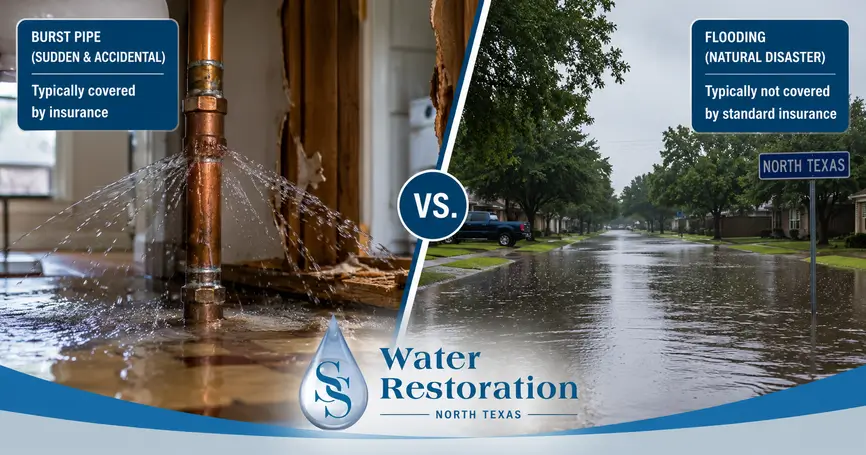
It may, depending on your policy and the cause of the damage. Sudden events such as a burst supply line are often treated differently from slow leaks or outside flooding. Read your coverage and call your insurer. Photos and moisture logs from the job support a claim.
How long does water extraction take?
Removing standing water usually takes hours. Drying the structure takes days, since the equipment runs until readings match dry materials. Hardwood, slabs under tile and wall cavities dry slowest. A good crew checks readings at each visit rather than pulling equipment on a fixed schedule.
Can water extraction prevent mold growth?
Yes, when drying follows the extraction. Mold needs moisture, and removing water quickly takes that away. Extraction alone can leave wet wall cavities and pad behind. That is why readings, dehumidifiers and air movers matter as much as the extractor.
What happens if I delay calling for water extraction?
Delay lets water wick further into drywall, framing and flooring, so materials that could have dried in place need replacing. Hardwood cups or buckles, carpet pad sours and mold risk rises. A sewage backup keeps contaminating whatever it touches. A delayed job costs more and takes longer.
How do you repair drywall from water damage?
Stop the leak, then mark the wet area with a moisture meter. Cut out soaked or contaminated drywall above the wet line, dry the cavity and framing, and replace wet insulation. Hang new drywall, then tape, finish, prime and paint. A dry stain from clean water may only need stain-blocking primer.
How do you repair a hardwood floor with water damage?
Extract the surface water, then dry the boards slowly with dehumidifiers and drying mats, because forcing heat can split them. Wait until the readings settle before judging the damage, since mild cupping often flattens. After that, sand and refinish the floor and replace any badly buckled boards.
Sources
- Flooding | US EPA – U.S. Environmental Protection Agency, retrieved 2026-09-29
- Mold – Overview | Occupational Safety and Health Administration – Occupational Safety and Health Administration, retrieved 2026-09-29