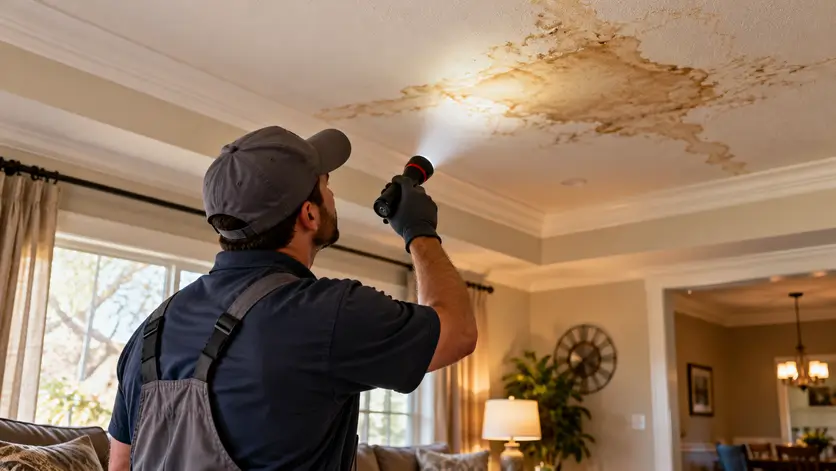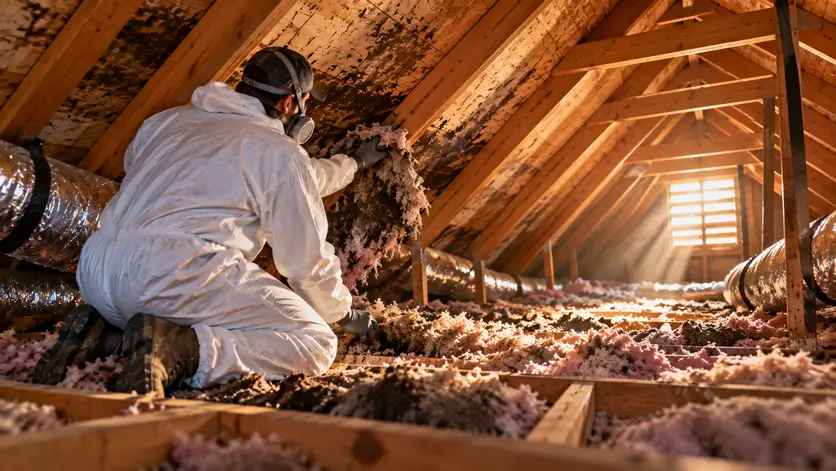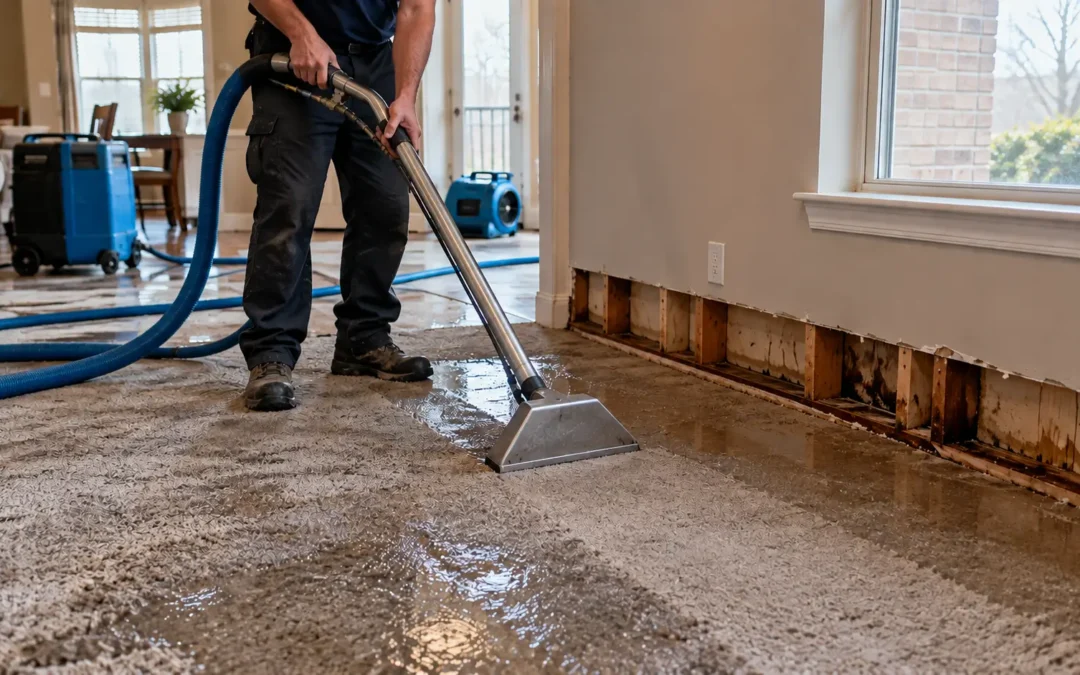


Black mold remediation involves more than removing visible mold. A professional mold remediation company identifies the moisture source, contains the affected area to prevent spores from spreading, removes or cleans contaminated materials, and thoroughly dries the structure to help prevent mold from returning.
For Plano homeowners, small areas of surface mold on nonporous materials may sometimes be manageable with proper cleaning. However, mold caused by a plumbing leak, water damage or excess moisture can spread behind drywall, under flooring and into other hidden areas. Professional black mold remediation helps locate the full extent of the problem, address the underlying moisture and remove contaminated materials safely—reducing the risk of repeated cleanup, additional property damage and costly repairs later.
Key Takeaways
- Small mold patches on hard surfaces can usually be cleaned with water and detergent.
- Professional remediation adds containment, HEPA vacuuming and removal of materials that cannot be cleaned.
- Mold returns when the moisture source stays unfixed, so controlling water comes first.
How dangerous is black mold to your household, and what are its hidden dangers?
Black mold is a genuine health and property concern, though rarely an emergency. The EPA’s guide to mold, moisture and your home says exposure can cause allergic reactions, asthma attacks and irritation of the eyes, nose and throat. The hidden danger is growth behind drywall and under flooring. Watch for:
- Musty smells
- Water stains or bubbling paint
- Warped flooring
Our guide to signs of a mold problem can help you judge urgency.
Is DIY or professional black mold remediation right for you?
Clean a small hard-surface patch yourself, but call a professional for hidden, widespread or water-soaked growth. EPA’s Mold Cleanup in Your Home guidance says small areas can be cleaned with water and detergent, and OSHA’s mold overview says remediation workers should wear gloves, goggles and an N-95 or higher-rated respirator.
| Situation | DIY | Professional |
|---|---|---|
| Small patch on tile | Reasonable with gear | Rarely needed |
| Mold in drywall or carpet | Material must go | Contained removal |
| Mold after a leak | Risky while wet | Extraction and drying |
For a small surface patch, read our guide on how to remove mold from walls safely.
Why is professional mold remediation worth it?
Professional remediation is worth it when growth is large, hidden or tied to a leak, because a professional contains the spread and finds the cause. Scrubbing without containment pushes spores into clean rooms. Professional black mold removal spares you repeat cleanups.
What happens during the professional mold remediation process, step by step?
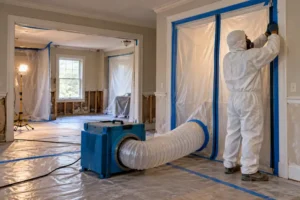
A professional job moves from inspection to containment, removal, cleaning and drying. EPA’s remediation guide for schools and commercial buildings describes containment, HEPA vacuuming and discarding materials that cannot be cleaned, so spores do not spread. The steps:
- Inspect and take moisture readings.
- Seal the area with plastic and negative air.
- Remove materials that cannot be cleaned.
- HEPA vacuum and damp wipe surfaces.
- Dry the structure and confirm readings.
- Identify the moisture source.
Our mold remediation services follow these stages.
Why does mold come back, and how do you keep it gone?
Mold comes back when the moisture that fed it remains, so controlling the water is how you keep it gone for good. EPA’s basic mold cleanup steps put fixing the moisture problem first. Slow plumbing leaks, HVAC condensation and poorly vented bathrooms are common sources. After any leak, fast water extraction limits growth. Our water damage restoration service handles extraction and structural drying.
What drives the cost of a remediation job?
None of the public guidance I rely on publishes a price, so the cost depends on what the inspection finds. It rises with:
- The size of the affected area
- Growth inside drywall, insulation or subfloor
- Spread into wall cavities or ceilings
- The amount of structural drying needed
- Sewage or flood water as the moisture source
How do you choose a mold remediation company in Plano and nearby towns?
Choose a company that finds the moisture source and explains what it will remove and how it will contain the area before work starts. Our guide lists the questions to ask mold remediation companies.
I’m Stephan Sannikov, owner of SS Water Restoration in Plano, which holds license #RCO1659. My construction and remodeling background shapes how I read water-damaged walls. We serve Plano and towns across Collin and Denton County.
What is the next step for professional black mold remediation?
Book an inspection soon after a leak, or as soon as a musty smell keeps coming back, so you have time to compare quotes and plan the work. Until then, stop any active leak and leave the growth undisturbed. Schedule a black mold inspection or call 469-737-0296.
Frequently Asked Questions
How can I identify black mold in my home?
Look for dark green or black patches in bathrooms, under sinks and around windows, and notice any musty odors. Check for water stains, peeling paint and warped flooring near past leaks. A musty smell with no visible growth often points to hidden mold.
What are the health symptoms of mold exposure?
Common symptoms include sneezing, a stuffy nose, coughing, itchy or watery eyes and throat irritation. Mold can also trigger allergic reactions and asthma attacks, and some people react more severely. Anyone with asthma or allergies should see a doctor about symptoms.
How long does mold remediation take?
Small, contained jobs can finish in a few days. Larger jobs take longer because materials must be removed, cleaned and dried, and the dryness confirmed, before the area is closed up. Your inspection gives a realistic timeline for your home.
Will my insurance cover mold remediation costs?
It depends on your policy. Many homeowners policies treat mold from a sudden event, such as a burst pipe, differently from mold caused by a long-term leak or neglect. Ask your agent about limits and deductibles before work begins.
Can mold return after professional remediation?
Yes, if the moisture problem is not solved. Removing mold without fixing the leak, condensation or poor ventilation behind it leaves the conditions for regrowth in place. Controlling indoor humidity and watching past wet spots keeps the odds of a return low.
How do professionals prevent mold from coming back?
They find the moisture source, remove materials that cannot be cleaned, clean the rest under containment and dry the structure until readings confirm it. They also flag ventilation and humidity problems so the homeowner can keep damp conditions from returning.
What not to spray on mold?
Never mix bleach with ammonia or other cleaners, because the fumes are dangerous. Do not rely on bleach for drywall, wood or carpet, because it does not reach mold inside porous material. Do not paint or caulk over mold either, because it keeps growing underneath.
Can a house be saved from black mold?
In most cases, yes. Mold on framing and hard surfaces can be cleaned, and contaminated drywall, insulation or carpet can be removed. The house recovers once the moisture source is fixed and the structure is dried, because that stops new growth.
How long can a person live in a house with black mold?
There is no safe timeline, because reactions vary from person to person. Some people notice nothing, while those with asthma or allergies may react quickly. If you can see or smell mold, fix it now rather than live with it.
Sources
- Mold Cleanup in Your Home – U.S. EPA, retrieved 2026-09-29
- A Brief Guide to Mold, Moisture and Your Home – U.S. EPA, retrieved 2026-09-29
- Mold Remediation in Schools and Commercial Buildings Guide: Chapter 1 – U.S. EPA, retrieved 2026-09-29
- Mold Overview – OSHA, retrieved 2026-09-29
- What are the basic mold cleanup steps? – U.S. EPA, retrieved 2026-09-29