

A leaking roof sends water into your attic and down into the rooms below, and the first days decide how much has to be torn out. Stephan Sannikov, owner of SS Water Restoration in Plano, wrote this for North Texas homeowners with a fresh ceiling stain: what to do about it and who pays for the repairs.
Key Takeaways
- Look for the opening where something breaks the roof surface, such as flashing around a chimney or vent, or a torn shingle.
- Do not wait on a small drip, because each storm wets the same materials again and pushes the damage further into living space.
- Take photos before you mop up or throw anything out, then get wet materials drying fast to keep mold from taking hold.
- Treat the house as dry only when moisture readings agree, and expect waterlogged attic insulation to be removed rather than left to dry.
Where do roof leaks usually start, and where does the water go?
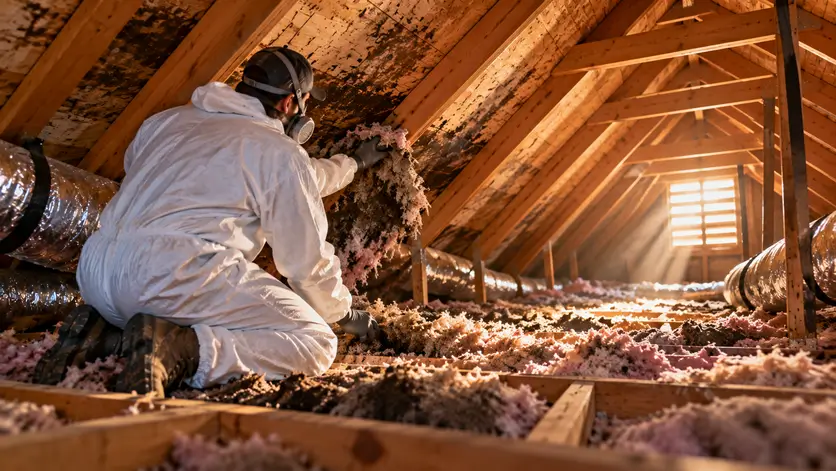
A roof leak starts where the roof surface is broken or interrupted, such as the flashing around chimneys and vent pipes or a valley, where two roof planes meet. Lifted or torn shingles let water in too. Once inside, water runs along the roof boards and rafters before it drops, so the ceiling stain can show up well away from the opening. It soaks the attic insulation first, then the drywall below. Our guide to handling water damage in the attic goes deeper on that first landing spot.
What happens if you leave a roof leak untreated?
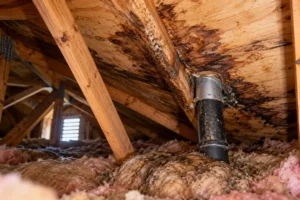
Left alone, a roof leak keeps feeding water into the same materials every time it rains, and the damage spreads from the attic into the rooms below. How far it gets depends on how much water comes in and how long the wet materials stay wet.
| Where the water sits | What it does if left untreated |
|---|---|
| Attic insulation | Packs down when soaked and stops holding heat |
| Ceiling drywall | Stains, then softens until it sags or gives way |
| Roof deck and rafters | Wood that stays damp begins to rot |
| Hidden cavities | Mold can grow out of sight above the ceiling |
First steps after a roof leak: stop the water, protect the room, document it
In the first hours, catch the water coming in, move your belongings out of its path, and photograph the damage before you clean anything. Speed matters here. The EPA’s brief guide to mold and moisture says that when wet materials are dried within 24 to 48 hours of a leak, in most cases mold will not grow.
- Stop what you can from inside. Set buckets under every drip. If the ceiling bulges with trapped water, a small hole at the lowest point lets it drain into one bucket so the drywall doesn’t give way all at once. Stay off the roof while it is raining.
- Protect the room. Shut off power at the breaker to any light or fan in the wet ceiling. Carry out rugs and furniture, and cover what can’t be moved with plastic sheeting.
- Document it. Take dated photos and video of the stain, the drips, the attic above and anything soaked, before you move or throw out a single item.
How do you dry the attic, insulation, ceiling and walls after a roof patch?
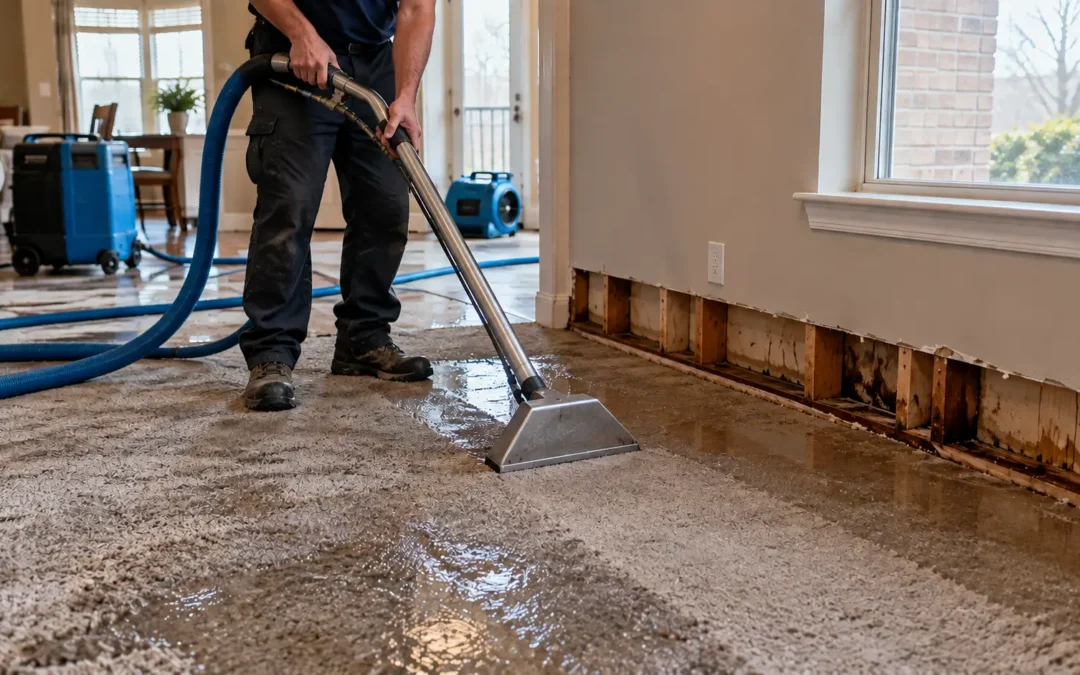
Drying works from the attic down, and it is finished when moisture readings say so, not when surfaces look dry. Soaked insulation is usually pulled out, because it holds water too long to dry in place and keeps air off the roof deck above the ceiling. Air movers and a dehumidifier then run in the attic. Ceiling drywall that sags or crumbles is cut out. Walls can stay wet inside behind dry paint, so a moisture meter decides whether a wall cavity gets opened.
Will homeowners insurance pay for water damage from a roof leak?
It depends on why the roof leaked, and the answer sits in your own policy’s wording. Homeowners policies are generally written for sudden, accidental damage, such as a storm tearing shingles loose, and the water that comes inside after that kind of event is what a claim is built around. A leak from an aging roof or a repair put off for years is a different case. An insurer can deny it as wear and tear or neglect, and the guide on what to do when a water damage claim is denied walks through your options from there. Damage that spread slowly before anyone noticed invites that label, which is one reason to learn the early warning signs of water damage. Read the exclusions before you file, and ask the adjuster whether the roof repair and the interior damage are handled as separate items. Moisture readings logged during water damage restoration show how far the water traveled and when each material reached dry, which gives the adjuster a measured record.
How do you get the roof fixed, the room restored and the next leak stopped?
Fix the roof first, then the room. A roofing contractor seals the opening, and only after that does interior repair make sense, because new drywall under an unsealed roof just gets wet again. Ask the roofer to show you exactly where the water got in and what was repaired, in photos if possible. Rebuilding the ceiling and walls waits until drying is confirmed. After the next hard rain, go into the attic with a flashlight and look at the roof boards around the patched spot for fresh dark stains.
What are the signs a roof leak is already damaging your home’s interior?
A roof leak is already damaging the inside once moisture shows on ceilings and walls, even with no drip yet. After a rain, check top-floor rooms for:
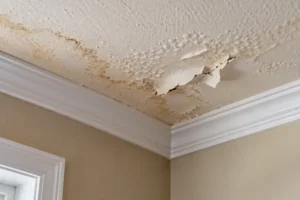
- Paint bubbling or peeling where the ceiling meets the wall, pushed off by moisture behind it.
- Drywall tape seams or nail heads showing through as the ceiling paper softens.
- A musty smell in an upstairs room or closet, pointing to moisture trapped above the ceiling.
- Rusty nail tips poking through the roof boards in the attic.
- Water collecting inside a ceiling light fixture.
What affects the cost of repairing water damage from a roof leak?
Nationally, water damage restoration typically runs $1,200 to $5,000, with an average of $3,000, according to Fixr’s water damage restoration cost guide, which puts ceiling repair, a common fix after a roof leak, at $325 to $1,100. The roof opening is priced separately. mrrooferatlanta.com’s roof leak cost guide puts a typical roof leak fix in the Atlanta market at $150 to $1,500, depending on where the leak is and what the roof is made of.
Our guide to water damage restoration cost in DFW goes further on local pricing. A quote from us for your own house is how you learn your actual number.
If a roof leak has reached your ceiling in Plano or elsewhere in Collin or Denton County, contact SS Water Restoration or call 469-737-0296.
Sources
- A Brief Guide to Mold, Moisture and Your Home | US EPA, U.S. Environmental Protection Agency, retrieved 2026-10-13.
- Water Damage Restoration Cost | Cost to Repair Water Damage | Fixr.com, Fixr, retrieved 2026-10-13.
- Cost to Fix Roof Leak: 2026 Pricing Guide | Mr. Roofer, mrrooferatlanta.com, retrieved 2026-10-13.