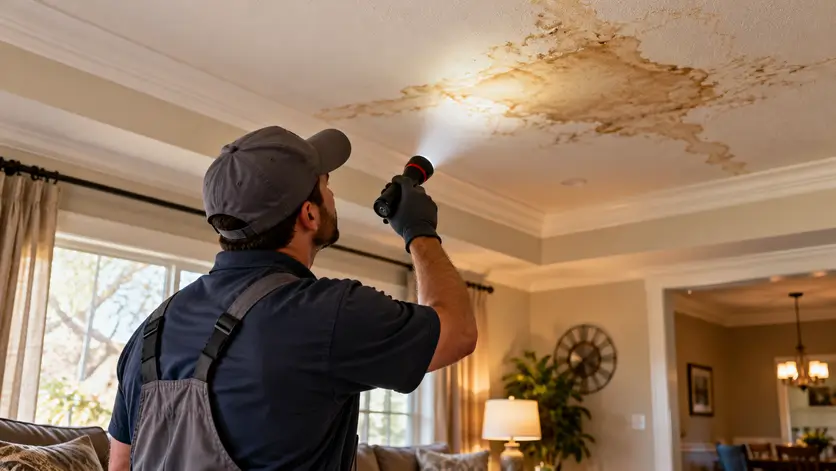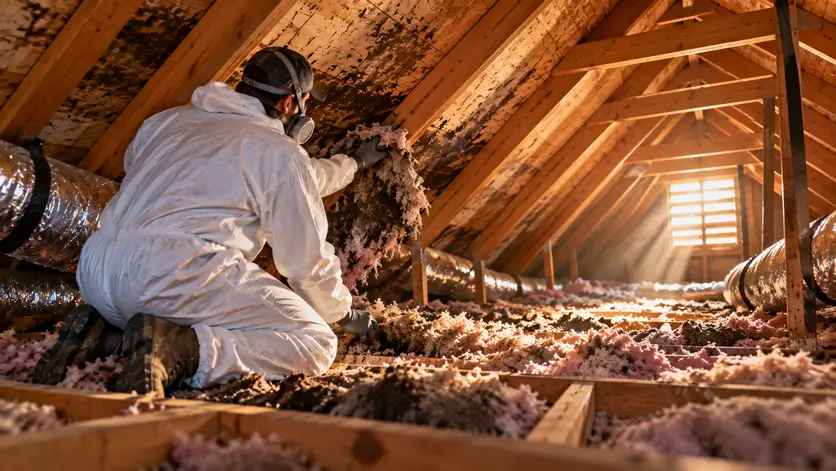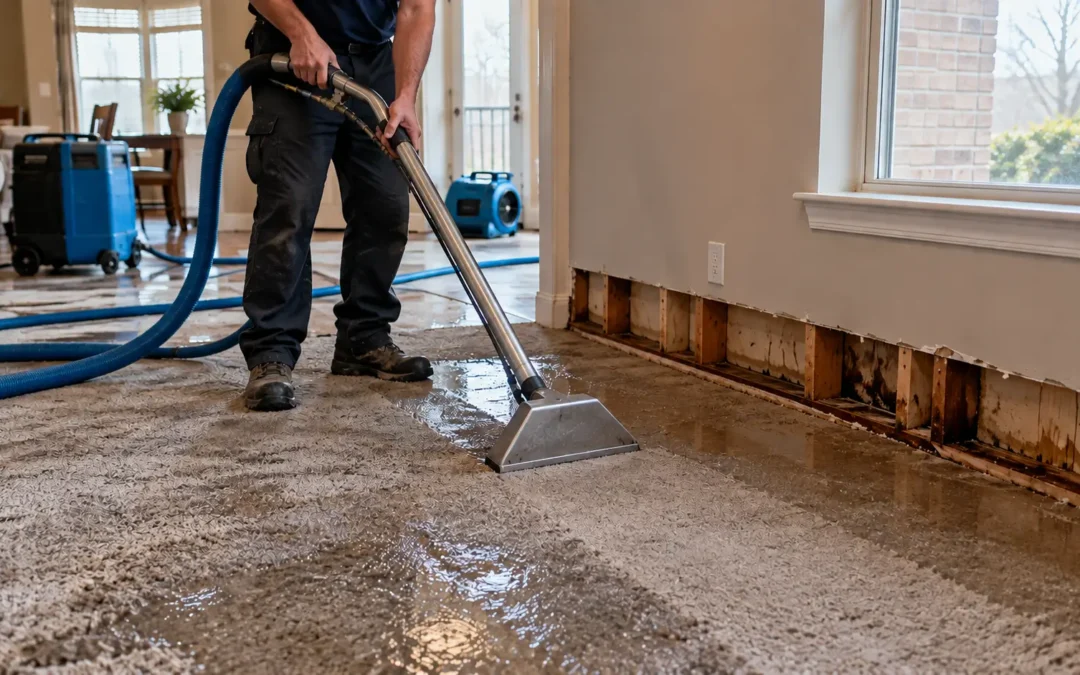


Water damage moisture readings help explain whether affected materials are drying, but a number without a location, material, and meter setting is easy to misunderstand. A useful drying log connects those details over time. It should help you understand what was checked, what changed, and what still needs attention before repairs begin.
If you are dealing with a leak in a North Texas home, you do not need to become a moisture-meter expert. These questions will help you have a more useful conversation with your restoration contractor.
Start with the material and the measurement
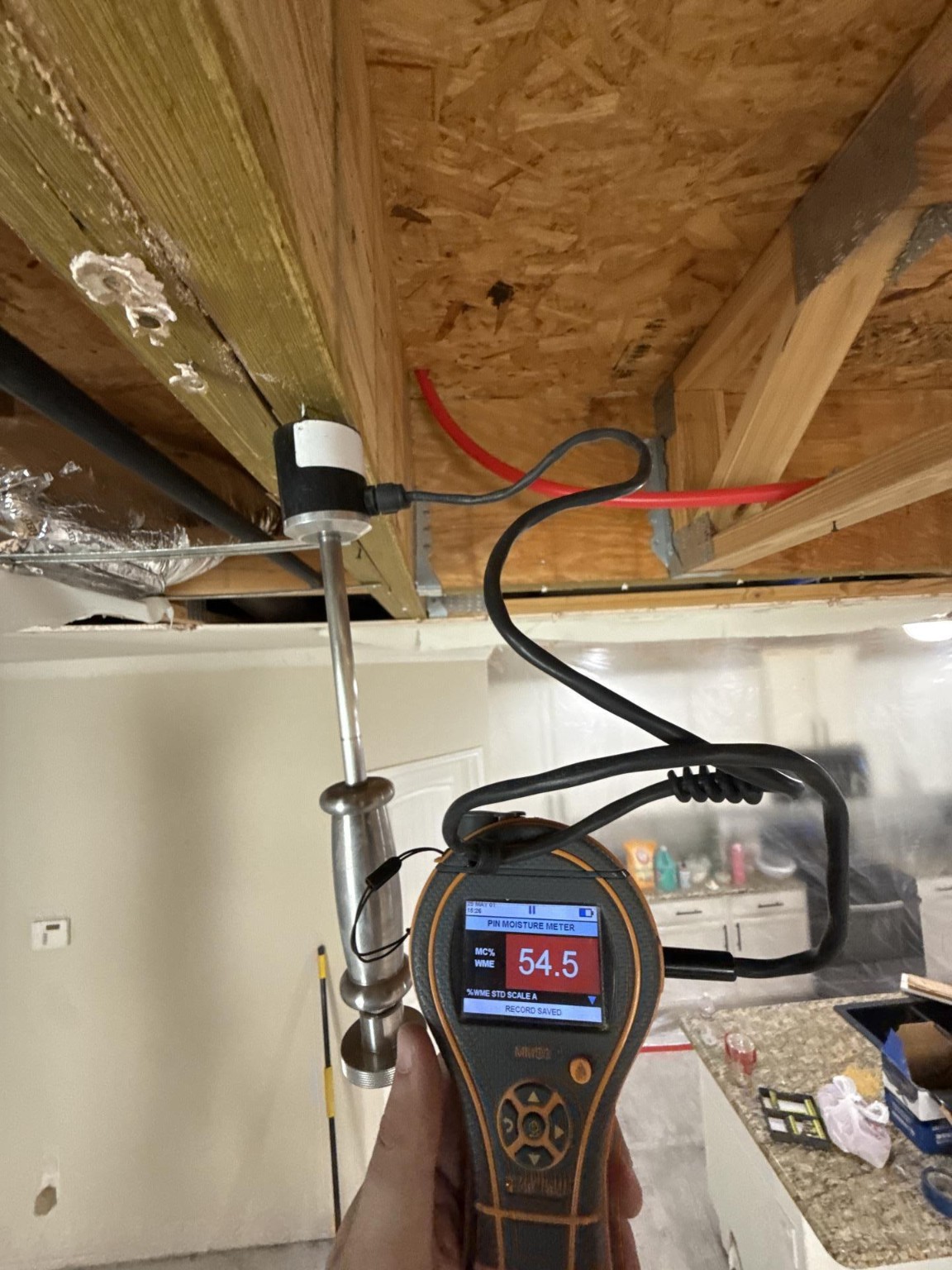
When a technician shows you a reading, ask, “What material are we measuring, and what scale is the meter using?” Wood moisture content, wood moisture equivalent (WME), and a relative search reading are different measurements. A relative reading of 200 is not 200 percent moisture, and a WME reading on drywall should not be described as that drywall’s actual water percentage.
Protimeter’s explanation of moisture readings distinguishes pin-type measurements from non-invasive screening and explains the value of comparing a material with a dry reference. Ask the technician to identify the appropriate reference for the material being tested.
What should a helpful drying log show?
Ask for a record you can connect to your home, rather than a page of unexplained numbers. These are useful details to request:
- Location: the room and specific wall, framing member, or floor area checked.
- Material: what was tested at that location.
- Method: the meter, mode, and scale used.
- Date: when each observation was recorded.
- Comparison: the reference or drying goal and why it applies.
- Changes: access openings, equipment adjustments, or newly discovered affected areas.
A photograph or simple location sketch makes the record easier to follow. For example, “bedroom wall next to closet door” is more useful to a homeowner than “point 4” without a key.
Compare the same locations over time
Ask whether repeat readings were taken at comparable locations using the same method. If the technician changed the measurement point or accessed a different layer, ask that the change be noted. Otherwise, two numbers may look like a drying trend when they describe different conditions.
The EPA’s remediation guide describes moisture meters as tools for evaluating building materials and monitoring drying. A log puts those observations into a record you can review with the contractor.
Ask what the reading does not cover
A measurement has a location and a method. Ask which parts of the assembly were checked and which remained inaccessible. If flooring, insulation, or a wall cavity was not assessed, that limitation belongs in the discussion before the area is closed.
Consider this homeowner question: “The painted wall looks normal now. Did the inspection also address the materials behind it?” That question does not assume demolition is necessary. It asks the contractor to explain the evidence supporting the proposed next step.
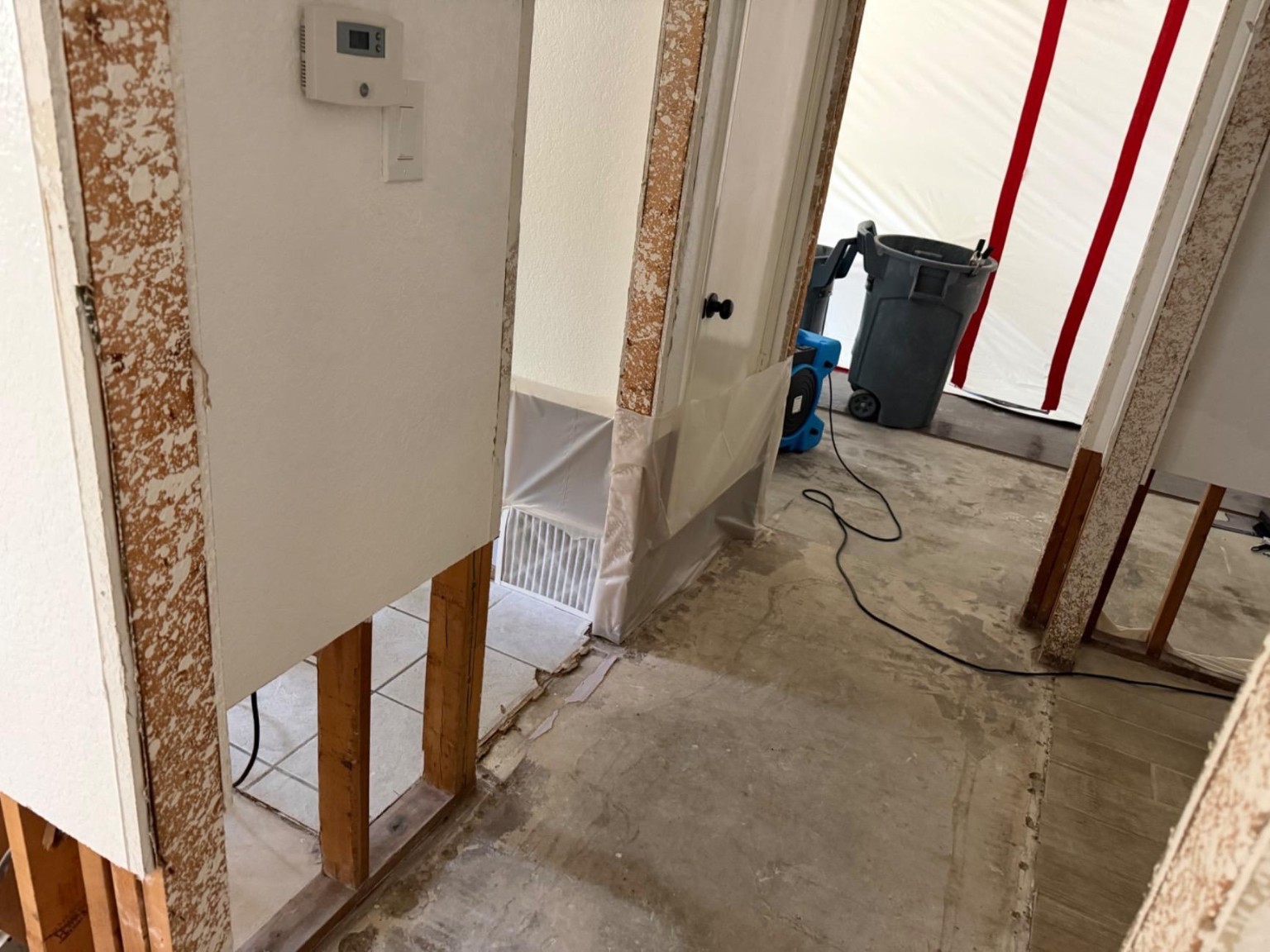
Separate equipment runtime from the completion decision
“How many days have the fans been here?” is a reasonable scheduling question. Follow it with, “What findings support removing the equipment?” Ask for the latest observations, the remaining concerns, and the reason for any extension or change in the plan.
Our structural drying guide explains the broader process. The drying log should connect that process to the specific areas being treated in your home.
Before drywall or flooring repairs begin
Request a clear handoff between mitigation and reconstruction. Ask who will review the affected areas, what documentation will be provided, and what additional checks the selected flooring, adhesive, or finish requires. A mitigation record and a product’s installation requirements answer different questions.
- Has the leak source been addressed?
- Which affected materials remain in place?
- Are any areas still inaccessible or unresolved?
- Who will confirm readiness for the planned repair?
- Who should you contact if staining or other changes return?
Common questions about water damage moisture readings
Can I compare readings from two different meters?
First ask whether the instruments use the same scale and method for the same material. Matching-looking numbers alone do not establish a meaningful comparison.
Does one low reading mean the entire room is ready?
Ask which location that reading represents and how the rest of the affected area was assessed. The record should explain the scope of the conclusion.
Can I request a copy of the drying documentation?
Ask the contractor what records are included with the service and when they will be available. Keep the documentation with the leak-repair notes, photographs, and restoration paperwork.
Need help understanding the next step after a leak?
SS Water Restoration provides water damage restoration services. Call (469) 737-0296 or request an assessment. Tell us where the leak occurred, whether the source has been repaired, and what changes you have noticed.