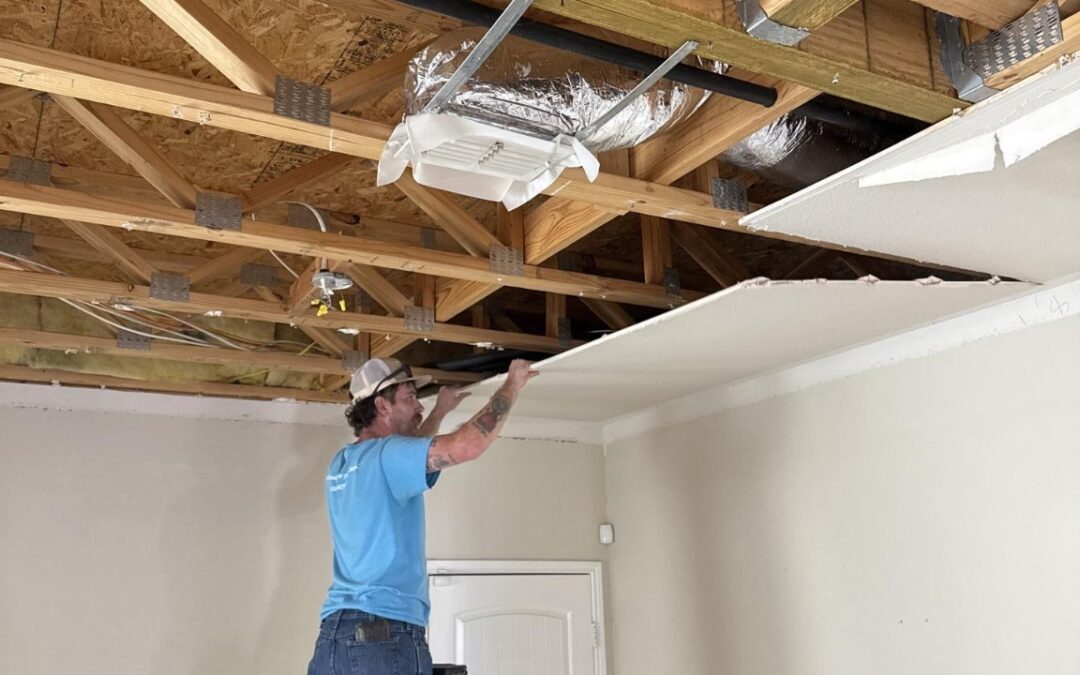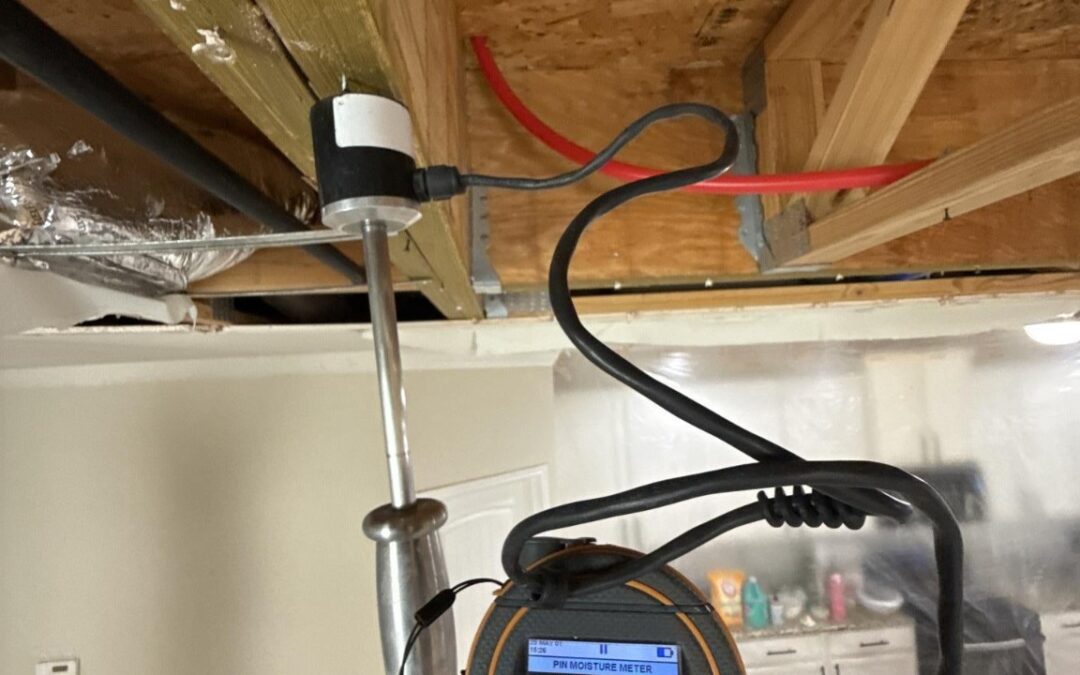

Water under flooring after a leak needs an assessment of the layers below the walking surface. Wiping up visible water is a start, but it does not answer whether the underflooring was affected. The EPA’s clean-water cleanup guidance specifically calls for checking underflooring and drying it when necessary.
This does not mean every wet floor must be removed. It means the decision should account for the floor assembly and the findings from your home.
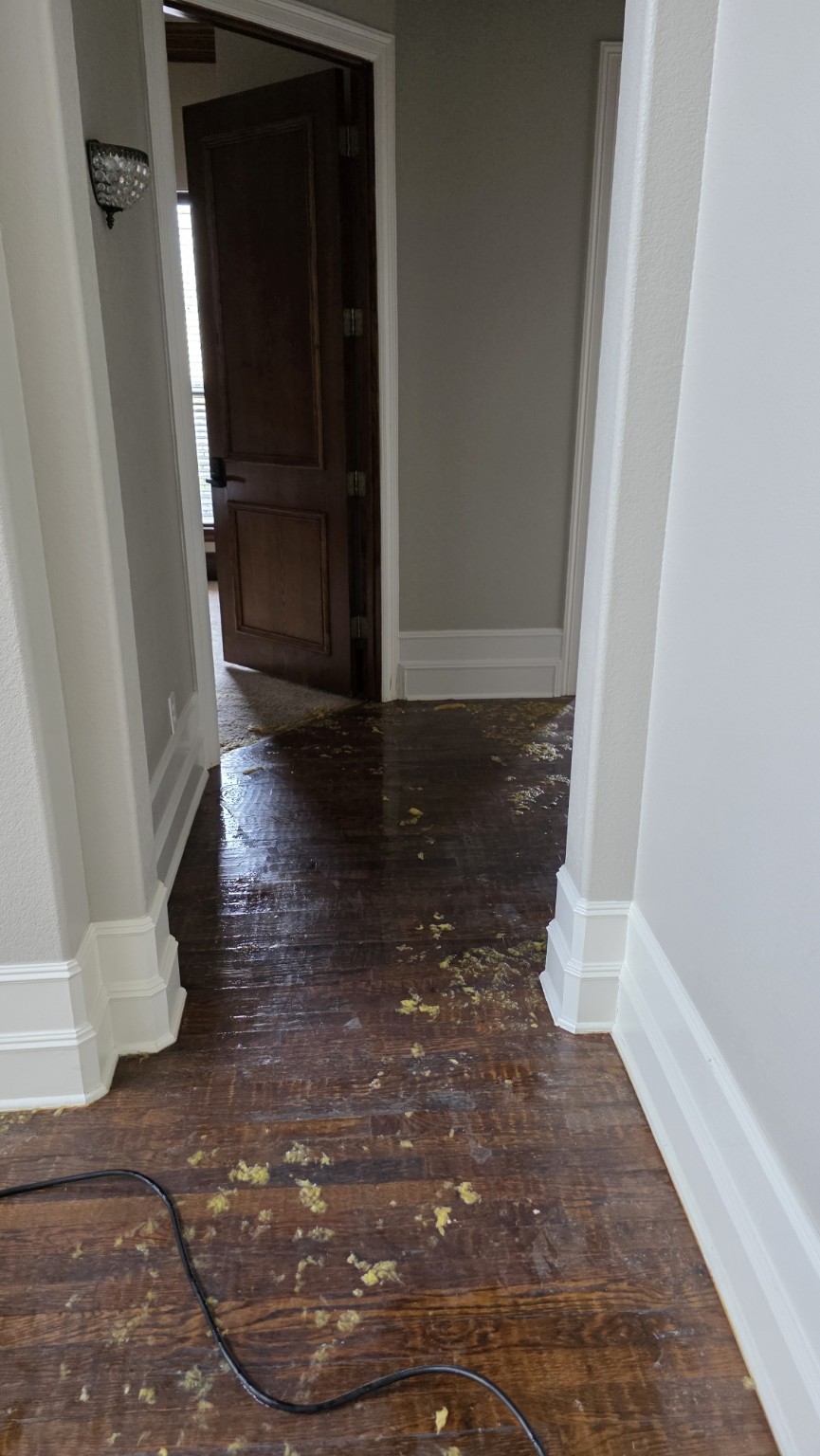
Start with the flooring information you have
Tell the restoration contractor whether the floor is tile, solid wood, engineered wood, laminate, vinyl, or carpet. If you have the product name, installation paperwork, or leftover packaging, keep it available.
You do not need to identify every layer yourself. Ask the inspector what is known about the floor and what still needs checking. Record when you discovered the leak and whether its source has been repaired.
Questions to ask about water under flooring
- Which areas were checked, including adjacent rooms?
- Was the material beneath the finish floor accessible?
- Which findings support keeping the floor in place?
- If removal is recommended, what is the reason and proposed extent?
- What remains uncertain without further access?
- What will be checked before replacement flooring is installed?
A recommendation to remove flooring should identify the problem that removal is intended to solve. Request a plain-language explanation and photographs that show the areas involved.
Keep measurements tied to specific locations
Ask the technician to explain what each reading represents. A reading at one accessible edge should be described by its actual location, rather than presented without context. Keep a sketch or labeled photographs with the records if the affected area extends through several rooms.
Our guide to moisture readings and drying logs explains why the material, meter mode, and comparison point belong with the number.
Separate drying from the replacement decision
Drying work and installing a new floor are different decisions. Before approving replacement, ask who will check the substrate and confirm the requirements for the selected flooring and adhesive.
Do not treat a calendar date as the only release condition. Ask what documentation will support moving from mitigation to installation, and who is responsible for that decision. If a repair contractor joins the project later, make sure the handoff includes the available drying records and unresolved questions.
Keep a simple record of visible changes
Photograph visible changes from the same safe location. Note when you first noticed them and whether the source has been repaired. Give those observations to the contractor without assuming they prove a particular cause.
If you see a new change after an assessment, report it and ask whether that area needs another check. Keep the original observations as well as later updates so the sequence stays clear.
Common homeowner questions
Does a dry-looking surface settle the question?
Ask what was established about the layers below it. Appearance alone does not explain which parts of the floor assembly were assessed.
Should I lift flooring myself to look underneath?
Ask the restoration contractor how any needed access will be created safely and how nearby finishes will be protected. Unplanned removal can change the condition before it is documented.
What should I keep for the repair stage?
Keep the flooring product details, leak-repair records, photographs, written scope, and available drying documentation together. Ask the installer what additional information is needed for the chosen replacement material.
Arrange an assessment after a leak
For a broader explanation of equipment and monitoring, read our structural drying guide. For help with an affected floor, contact SS Water Restoration at (469) 737-0296.