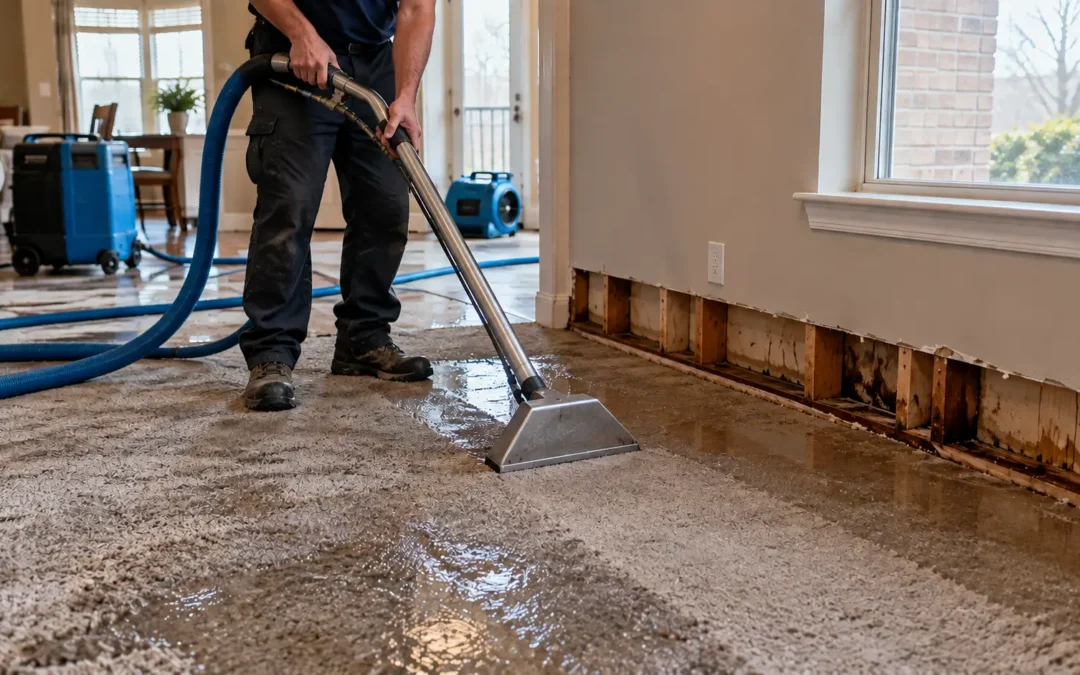


Attic mold remediation in a Plano home is the work of getting mold out of the space above your ceiling and keeping it out. Stephan Sannikov, owner of SS Water Restoration (licensed, #RCO1659), wrote this for homeowners in Plano and nearby North Texas towns who suspect mold overhead. It explains why attics grow mold, how the work is done, what moves the price and where insurance stands.
Key Takeaways
- Treat attic mold as proof that water is reaching the attic, and track down where it comes from before anything else.
- Clean a small spot on solid lumber yourself only once the leak is fixed; mold in insulation calls for a professional.
- Expect a professional crew to dry the attic completely before any insulation or surfaces are closed back up.
- Mold returns only if the water does, so keep confirming that the roof or pipe repair is still holding.
- A musty odor at the hatch or damp, matted insulation is reason enough to inspect the decking above it closely.
Why does mold grow in attics, from roof leaks to AC condensate lines?
Attic mold starts with water. The EPA’s guide to mold, moisture and your home says none of the many types of mold will grow without water or moisture. Spores that drift into an attic only take hold where they land on damp roof decking or insulation.
That moisture reaches an attic in a few ways:
- Roof leaks. Water that gets past the shingles or flashing soaks the roof materials.
- AC condensate. If your air handler sits in the attic, a poorly draining pan or a blocked condensate line leaves standing water next to the framing. Our guide to AC leak water damage in DFW covers those leaks.
- Humid, stale air. The EPA’s mold course lists high humidity (60% relative humidity) among the moisture problems behind mold. Without adequate ventilation, that moisture builds up under the roof.
A leak nobody notices is enough to start growth, and molds gradually destroy the things they grow on. Our guide to handling water damage in the attic deals with the wet attic itself. Our mold prevention strategies cover keeping it dry.
Can attic mold be removed for good, and when is DIY not enough?
Yes, the growth itself can be cleaned off or cut out, but it stays gone only if the water that fed it is stopped. Whether you can handle that yourself depends on what the mold is on and how far it has spread.
| Factor | A homeowner cleanup may do | A professional job fits better |
|---|---|---|
| Spread | One small spot on a rafter | Patches across the decking |
| Material | Solid framing lumber | Batts or blown insulation |
| Moisture source | Found and already fixed | Unknown or still leaking |
| Location | Away from equipment | Around the air handler or ducts |
Steps in professional attic mold remediation
A professional attic job runs in order: find the water, see how far the growth reaches, seal the attic off, remove or clean what grew mold, then dry everything before anything is closed back up. Here is how that mold remediation work goes, step by step.
- Trace the moisture. The crew finds the leak or condensate problem first, so the cleanup is not undone by the same water.
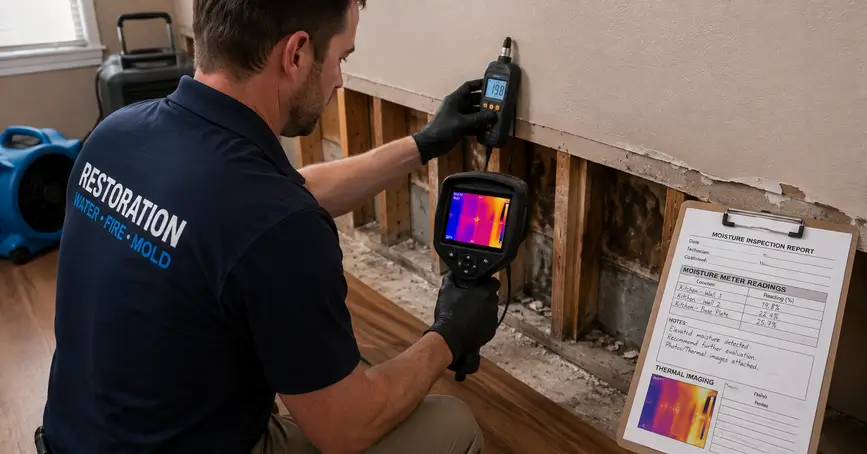
- Map the spread. Insulation is pulled back and the decking checked to see where growth stops.
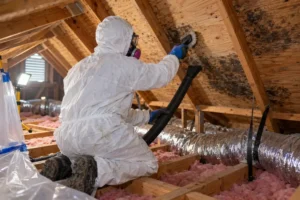
- Contain the attic. The hatch and openings into the living space are sealed so spores loosened during removal stay up there.
- Remove and clean. Moldy material is cut out or cleaned off the framing.
- Dry the structure. The EPA’s mold course notes remediation firms often use large fans and dehumidifiers to dry wet materials quickly.
- Treat the air handler with care. That same course says experience and professional judgment should be used with the HVAC system.
The EPA’s mold cleanup page tells you to ask the contractor to follow its schools and commercial buildings guide or IICRC guidelines, a good question when you compare mold remediation companies. For a home here, our page on mold remediation in Plano covers the local service.
How do you keep mold from coming back after the cleanup?
Mold stays away as long as the repair that stopped the water keeps holding, so the follow-up is a matter of checking that repair. After the first hard rain, look at the decking where the leak was and feel the insulation below it for dampness. During the first stretch of heavy AC use, check that the condensate pan is dry and the line is draining. Before the crew leaves, ask which spots to watch and what a new stain there would mean.
What are the signs of attic mold, and how serious is it?
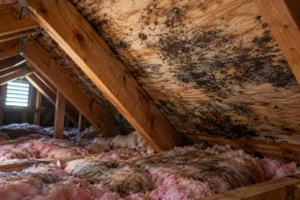
Look for dark spotting or staining under the roof decking and along the rafters, and a musty smell when you open the hatch. Damp or matted insulation and water stains on the ceiling below point to the moisture feeding it.
How serious it is depends on how far the growth has spread and whether the water is still getting in. A dry, isolated spot is a smaller job than wet decking. Wood that turns soft when you press a screwdriver into it means the damage has reached the structure.
What affects the cost of removing mold from an attic?
An attic mold bill is set by what has to come out of the attic and how hard it is to work up there. The EPA’s mold cleanup guidance says mold on hard surfaces can often be cleaned, but porous materials with mold growth usually need to be removed and discarded. In an attic, that line usually falls between the framing and the insulation.
- Insulation to remove. Moldy batts or blown insulation get bagged and carried out through the hatch, and the bare area then needs new insulation.
- Decking condition. Growth that cleans off solid lumber is less work than sheathing so damaged it has to be cut out.
- Access and headroom. A low-pitched roof or a tight hatch slows every step of the job.
- Drying time. Framing that is still wet keeps drying equipment running longer before anything can be closed up.
- Fix plumbing leaks and other water problems as soon as possible. Dry all items completely.
- Hidden Mold
Ask for a written scope that lists removal, cleaning and drying separately, so you can see which of these is setting your number.
Will homeowners insurance pay for mold in the attic?
Whether insurance pays depends on the wording of your own policy, so the answer starts there. Find the section on mold or fungi, read the exclusions printed beside it, and note any dollar cap it sets. If the wording leaves you unsure, ask your agent two things: whether the policy covers mold at all, and whether a mold rider (an add-on endorsement that extends coverage to fungi) is already on it or can be added.
Before anything comes out of the attic, record what is up there. Photograph the stained decking and the roof leak or condensate pan that fed it. Write down the date you first noticed the smell or the ceiling stain, because a claim may ask when the damage started.
SS Water Restoration is a licensed contractor (license #RCO1659) in Plano working across the surrounding cities, and you can send us a message or call 469-737-0296 to have the attic looked at.
Frequently Asked Questions
Do most homes have mold in the attic?
Every home has some mold spores, but mold growing in the attic is not normal. The EPA’s guide to mold, moisture and your home says it is impossible to get rid of all mold spores indoors; some always float in the air and settle in house dust. Spores alone are not the problem. Growth you can see is.
How can you tell if attic mold is active or old?
Old mold stains can remain on attic wood long after a moisture problem has been corrected, so discoloration alone does not mean mold is still growing. New or spreading patches, damp wood, musty odors, and recurring condensation may indicate an ongoing problem. A professional mold inspection can help determine whether moisture is still present and whether remediation is necessary.
Will attic mold come back after remediation?
Attic mold can return if the moisture problem that caused it is not corrected. Common causes include poor attic ventilation, roof leaks, bathroom exhaust fans venting into the attic, and air leaks that allow warm, humid indoor air to reach cold roof decking. Proper remediation removes the mold growth, but fixing the moisture source is what helps prevent it from returning.
Sources
- A Brief Guide to Mold, Moisture and Your Home | US EPA, U.S. Environmental Protection Agency, retrieved 2026-10-08.
- Mold Cleanup in Your Home | US EPA, U.S. Environmental Protection Agency, retrieved 2026-10-08.
- Mold Course Chapter 2: | US EPA, U.S. Environmental Protection Agency, retrieved 2026-10-08.