

The water is rising toward the rim and it’s not going down. In the thirty seconds it takes you to react, a toilet overflow can put gallons on the bathroom floor — and if the toilet is upstairs, into the ceiling below. Whether that water is a simple mop-up or a genuine biohazard depends entirely on one thing: where it came from.
This guide covers exactly what to do the moment a toilet overflows, how to tell if the water is dangerous, and when the cleanup is a job for a professional.
Key Takeaways
- Act in seconds: stop the water at the shutoff valve behind the toilet (or lift the tank float), then contain the spill before it spreads.
- The danger depends on the source — a clean-water overflow is Category 1, but sewage-contaminated water is Category 3 “black water,” a biohazard.
- Overflow water travels: from an upstairs bathroom it damages the ceiling, insulation, and fixtures in the room below.
- Dry within 24–48 hours to prevent mold (EPA); contaminated overflows need professional cleanup, not a mop.
What Should You Do the Moment a Toilet Overflows?
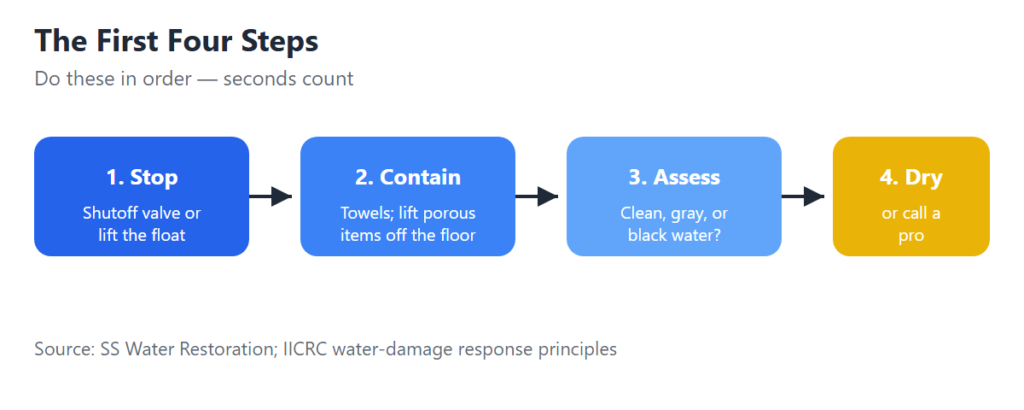
Stop the water first — everything else is secondary. Reach behind the toilet and turn the shutoff valve clockwise until it stops; if there’s no valve or it’s stuck, lift the tank lid and push the flapper down or lift the float to stop the fill. Then contain and protect: towels around the base, and get anything porous off the floor.
Speed matters because the cost curve is steep — one inch of water can cause up to $25,000 in damage (This Old House). Once the flow is stopped, your job shifts to limiting how far the water spreads and figuring out what kind of water you’re dealing with.
Why Did My Toilet Overflow?
Most overflows come from a blockage or a failed fill mechanism. A clog in the trap or drain is the usual culprit — too much paper, a flushed object, or a slow buildup. But if more than one fixture backs up at once, the problem may be deeper: a blocked main line or a sewer backup pushing water up through the lowest drain in the house.
That distinction matters for your health, not just your plumbing. A simple clog usually means clean or lightly contaminated water. A sewer-line backup means the water coming up is sewage — and that changes everything about how you handle it. If you’re seeing repeated backups across multiple drains, that points to the main line, and it’s worth reading about whether you need a permit to replace a sewer line.
Is Toilet Overflow Water Dangerous?
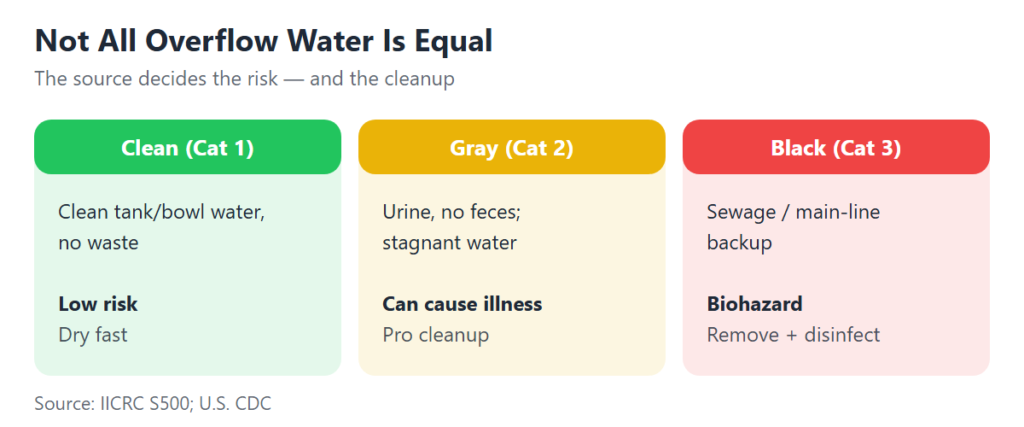
It depends on the source, and the difference is critical. Restoration pros classify water into three categories under the IICRC S500 standard: Category 1 (clean), Category 2 (gray), and Category 3 (black). A toilet that overflows with clean tank or bowl water — before waste — is closer to Category 1 or 2. A toilet backing up with sewage is Category 3 black water, and it’s treated as a biohazard.
That’s not an overreaction. The CDC warns that contact with sewage-contaminated water can cause gastrointestinal illness, wound infections, and diseases like leptospirosis, because it can carry bacteria such as E. coli and Salmonella (CDC). Category 3 water isn’t a cleaning job — it’s a containment job. For the full breakdown of what each category means, see our guide to the 3 water damage categories.
How Bad Is the Damage to the Floor Below?
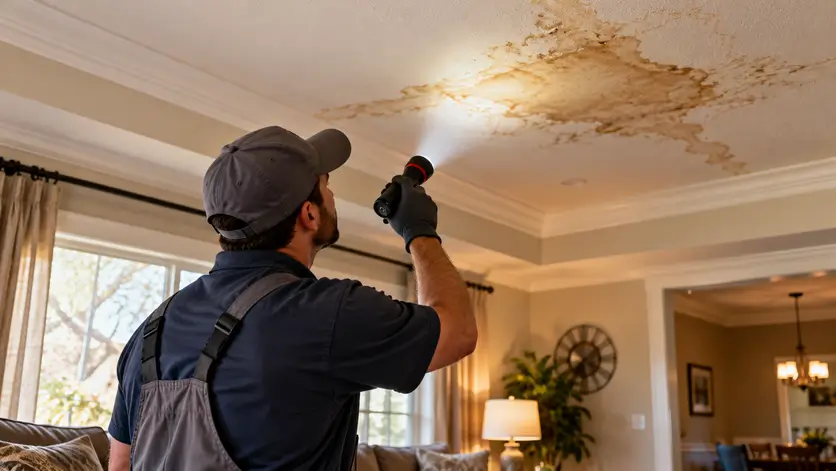
An upstairs overflow is a two-room problem. Water pools on the bathroom floor, finds the gaps around the toilet flange and baseboards, and drains straight down — soaking the ceiling, insulation, and light fixtures of the room below. By the time a stain appears downstairs, the subfloor and joists above it have usually been wet for a while.
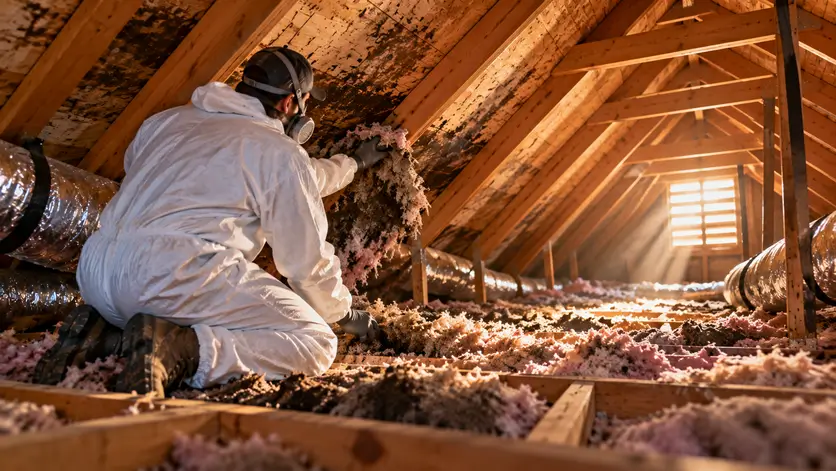
That’s why an overflow you “cleaned up” can still be a problem days later. Trapped moisture inside the floor assembly doesn’t dry on its own, and it’s exactly where mold takes hold. Watching for the early signs of water damage — a spreading ceiling stain, a musty smell, sagging drywall — helps you catch hidden damage before it spreads.
How Do You Clean Up a Toilet Overflow Safely?
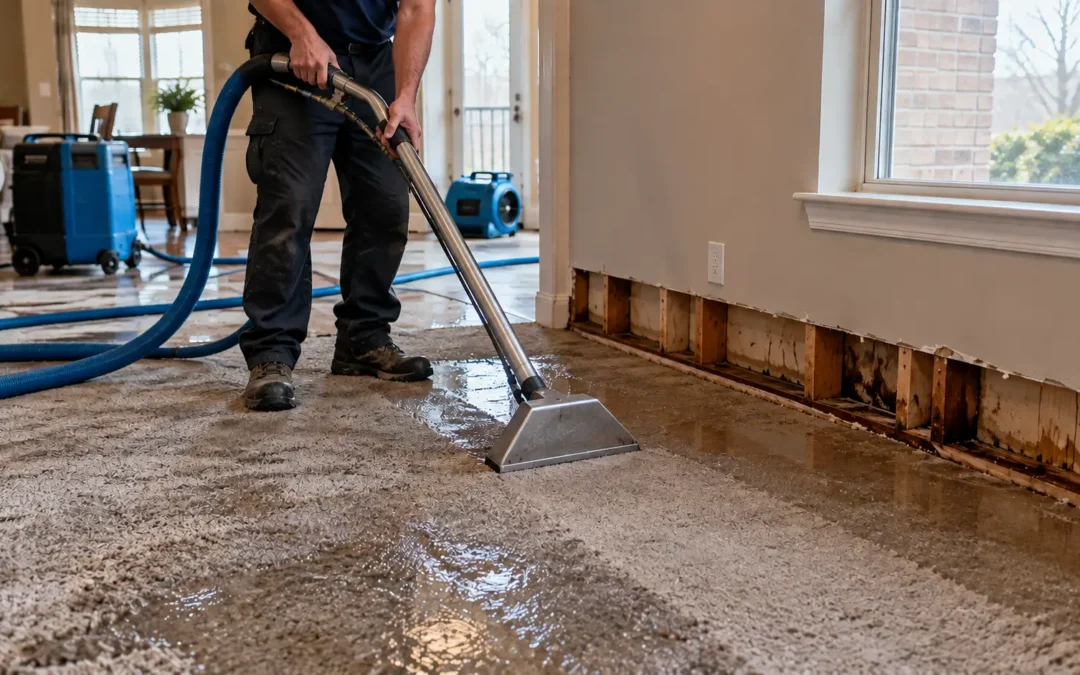
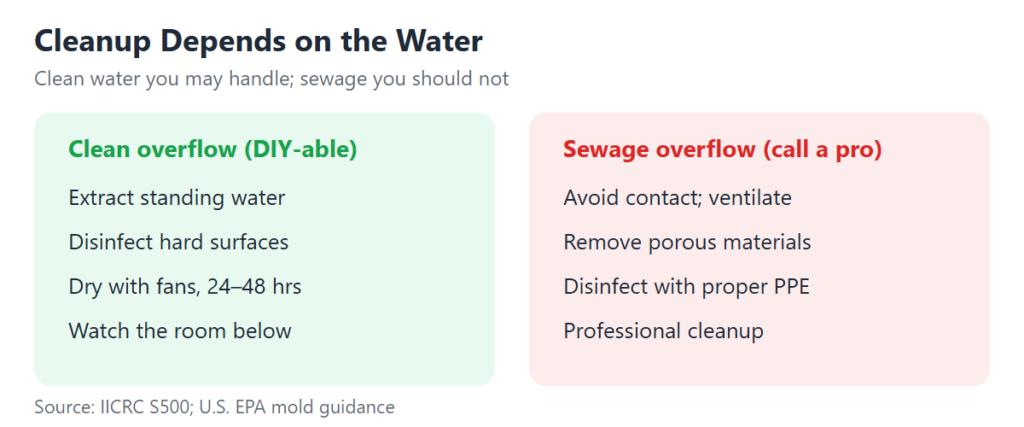
Match the cleanup to the category of water. For a clean overflow, extract the water, disinfect the floor, and dry the area thoroughly with fans within 24 to 48 hours to prevent mold (EPA). For anything involving sewage, stop — this is not a DIY job. Contaminated porous materials (carpet, padding, drywall that wicked it up) usually have to be removed, not dried, and every surface needs proper disinfection with the right protective gear.
The instinct to grab a towel and move on is what turns a $200 problem into a mold remediation bill. When sewage is involved, professional sewage cleanup protects your health and your home.
Does Insurance Cover a Toilet Overflow?
Usually yes, when it’s sudden and accidental. A surprise overflow that damages your floors and the ceiling below is typically covered by homeowners insurance, while damage from a problem you knew about and ignored may not be. Water damage is a common, costly claim — water damage and freezing make up 22.6% of all home insurance claims, averaging $15,400 (Insurance Information Institute, 2025).
Document everything before you clean: photograph the standing water, the source, and the damage below. That record is what supports the claim and establishes the cause. If mold has already started from a delayed cleanup, you may also need mold remediation, which is a separate part of the work.
When Should You Call a Restoration Pro?
Call a professional whenever the water is contaminated, has reached the floor below, or has soaked materials you can’t fully dry. Sewage overflows are non-negotiable — the health risk is real and the disinfection has to be done right. And even a clean overflow becomes a pro job once it’s inside the ceiling or subfloor, where you can’t reach the moisture.
At SS Water Restoration, our IICRC-certified team identifies the water category, contains and removes what can’t be saved, disinfects, and dries the structure — then documents it for your insurer. Founder Stephan Sannikov (license #RCO1659) leads a crew providing water damage restoration across Collin and Denton County.
Toilet overflow flooded your home? Call SS Water Restoration 24/7 at (469) 737-0296 for a free North Texas inspection. We handle contaminated water safely, dry it right, and bill your insurance directly.
Frequently Asked Questions
Is toilet overflow water dangerous?
It depends on the source. Clean tank or bowl water is low-risk, but a sewage backup is Category 3 “black water” — a biohazard. The CDC links contact with sewage-contaminated water to gastrointestinal illness, wound infections, and diseases like leptospirosis (CDC). When in doubt, treat it as contaminated.
What do I do first when my toilet overflows?
Stop the water. Turn the shutoff valve behind the toilet clockwise, or lift the tank lid and raise the float to stop the fill. Then place towels to contain the spill and move porous items off the floor before assessing whether the water is clean or contaminated.
Does a toilet overflow damage the floor below?
Yes, if it’s an upstairs bathroom. Water drains through gaps around the toilet and baseboards into the ceiling, insulation, and fixtures below. Because one inch of water can cause up to $25,000 in damage (This Old House), catching hidden moisture early is essential.
Is a toilet overflow covered by insurance?
Sudden, accidental overflows are usually covered; damage from a known, ignored problem may not be. Water damage and freezing account for 22.6% of home claims, averaging $15,400 (Insurance Information Institute, 2025). Document the source and damage with photos before cleaning up.
Can I clean up a toilet overflow myself?
A small, clean-water overflow — yes, if you extract, disinfect, and dry it within 24–48 hours. But sewage or a main-line backup is a biohazard that needs professional cleanup and PPE, and any water that reached the floor below should be assessed by a pro.
The Bottom Line for North Texas Homeowners
A toilet overflow is a race against two clocks: how far the water spreads, and the 24–48 hour mold window. Here’s what to remember:
- Stop the water immediately at the shutoff valve or the tank float.
- The source decides the risk — clean water you may handle; sewage is a biohazard.
- Upstairs overflows damage the room below; watch for hidden moisture and stains.
- Dry within 24–48 hours, and call a pro for any contaminated or hidden-moisture situation.
If a toilet has overflowed anywhere in DFW, call SS Water Restoration 24/7 at (469) 737-0296 for a free inspection.
Sources
- IICRC, S500 Standard for Professional Water Damage Restoration (water categories), retrieved 2026-07-02, https://iicrc.org/s500/
- U.S. Centers for Disease Control and Prevention, Floodwater After a Disaster or Emergency — Safety, retrieved 2026-07-02, https://www.cdc.gov/floods/safety/floodwater-after-a-disaster-or-emergency-safety.html
- U.S. Environmental Protection Agency, A Brief Guide to Mold, Moisture and Your Home, retrieved 2026-07-02, https://www.epa.gov/mold/brief-guide-mold-moisture-and-your-home
- Insurance Information Institute, Facts + Statistics: Homeowners insurance, retrieved 2026-07-02, https://www.iii.org/fact-statistic/facts-statistics-homeowners-and-renters-insurance
- This Old House, Water Damage Statistics (citing FEMA), retrieved 2026-07-02, https://www.thisoldhouse.com/foundations/water-damage-statistics